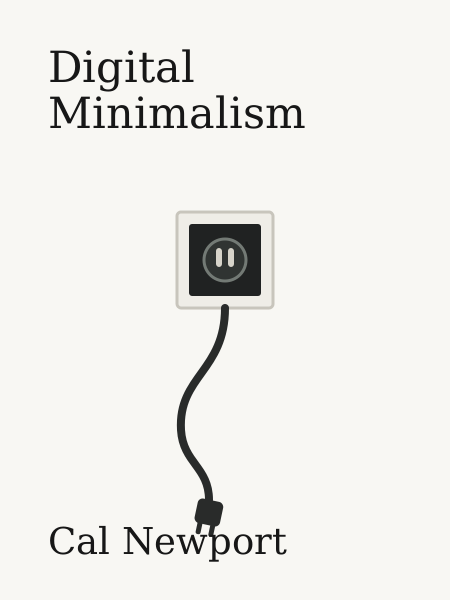
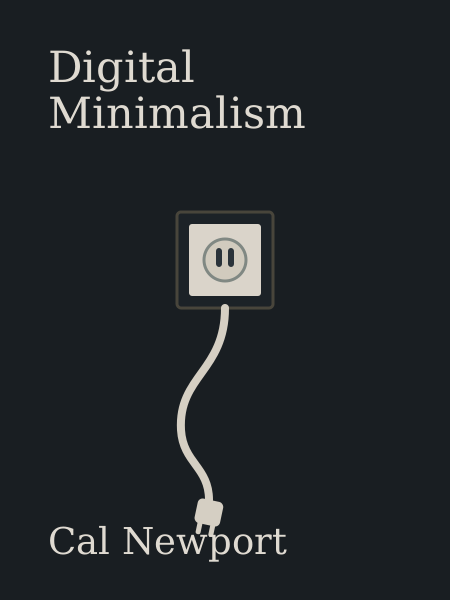
Digital Minimalism
Cal Newport · 2019
Editorial rating
- Evidence
- 7/10
- Actionability
- 7/10
- Originality
- 6/10
The thesis
Our relationship with technology has become compulsive and extractive - designed by attention engineers to maximize engagement, not well-being. Reclaiming your life requires a philosophy of intentional technology use, not just tips and tricks.
Who this is for
Knowledge workers who feel perpetually distracted, anyone who picks up their phone without knowing why, and people who sense their digital habits are undermining their capacity for deep work and meaningful relationships.
My favorite quote
The urge to check Twitter or refresh Reddit becomes a nervous twitch that shatters uninterrupted time into shards too small to support the presence necessary for an intentional life.
Why it matters
This captures the real cost of compulsive scrolling - not just wasted time, but the destruction of the sustained attention required for anything meaningful.
Do this
Notice your next phone pickup. Ask: "Did I decide to do this, or did I just react?" Track reactive pickups for one day.
Start here
Perform a 30-Day Digital Declutter: Remove all optional technologies from your life for 30 days. During this period, rediscover high-quality leisure activities. Then reintroduce technologies selectively, only those that strongly support your values - and with specific constraints on how and when.
Critical summary
Cal Newport, the Georgetown computer scientist behind Deep Work, extends his attention philosophy from work into personal life. The core framework argues that minor tweaks (turning off notifications, digital sabbaths) don't address the fundamental problem: we've adopted technologies without considering whether they serve our values.
Newport proposes "digital minimalism" - a philosophy where you use technology to support things you deeply value, and ignore everything else. The 30-day declutter is the practical implementation, forcing a reset of compulsive habits.
What it gets right
- Frames technology use as a philosophical choice, not a time management problem
- The "solitude deprivation" concept explains modern anxiety well
- Emphasizes replacing digital habits with high-quality alternatives, not willpower alone
- Draws on Thoreau and Aristotle to ground advice in deeper values
What it misses
- Solutions assume significant privilege: "take long walks," "do woodworking" - not accessible to everyone
- Examples feel dated (Lincoln, Thoreau, Roosevelts) and occasionally classist
- Repetitive - the core message could be a long blog post
- Doesn't adequately address people whose jobs require constant digital engagement
- Light on dealing with social pressure ("but everyone uses WhatsApp!")
Evidence is primarily anecdotes from Newport's readers who completed the declutter. No controlled studies, but the underlying psychology on attention and addiction is sound.
Key concepts
Digital Minimalism
Use technology only when it strongly supports your values. Ignore everything else. Apply to your next app download decision.
30-Day Declutter
Remove optional tech for 30 days, explore offline activities, then selectively reintroduce with constraints.
Solitude Deprivation
The state of never being alone with your thoughts. Modern cause of anxiety. Schedule phone-free walks.
High-Quality Leisure
Demanding activities that produce satisfaction (building, creating, learning) vs. passive consumption. Cultivate before you declutter.
Conversation Office Hours
Consolidate texting into scheduled real-time conversations. Tell friends you're available 5-6pm for calls.
Attention Resistance
Recognize that tech companies are adversaries competing for your attention. Act accordingly.
Core insights
-
Tech companies are not your friends
Their business model profits from your attention. Design your usage as resistance, not partnership.
-
Minor fixes don't work
Turning off notifications is like an alcoholic switching from whiskey to beer. The compulsion remains.
-
Replace before you remove
Don't create a void. Have high-quality leisure ready before decluttering.
-
Loneliness is partly a bandwidth problem
Text and social media provide low-bandwidth connection that doesn't satisfy social needs.
-
Solitude is productive, not indulgent
Great thinking happens in solitude. Filling every moment with inputs prevents insight.
Implementation steps
Today
- Track every phone pickup for 24 hours - note whether it was intentional or reactive
- Identify your top 3 "time sink" apps (likely social media, news, or entertainment)
This week
- Remove those 3 apps from your phone (you can still access via browser)
- Schedule one 30-minute phone-free walk - no podcasts, no music, just your thoughts
This month
- Begin the 30-day digital declutter: define your "optional" technologies, remove them, commit fully
- Identify 3 high-quality leisure activities to explore during the declutter
Ongoing
- Maintain weekly "conversation office hours" for real-time connection
- Before adding any new app or service, apply the minimalist screen: Does this strongly support my values?
Suggested 30-day practice plan
An editorial application plan created by Monolithic Vault - an interpretation of the book's ideas, not part of the original book.
- Day 1
List all optional technologies (social media, streaming, news apps). Remove from phone.
- Day 2
Take your first phone-free walk. Notice what thoughts arise.
- Day 3
Start a list of high-quality leisure activities you want to explore
- Day 7
Check in - what do you miss? What don't you miss? Adjust rules if needed.
- Day 14
Attempt one new high-quality leisure activity (build something, learn a skill, join a group)
- Day 21
Review your energy and attention levels. Compare to pre-declutter baseline.
- Day 30
Reintroduce technologies selectively. For each, define: what value does this serve? What constraints will I apply?
Free PDF summary
Take this analysis with you: a designed two-page field-notes sheet with the thesis, my favorite quote, the key concepts and core insights, and the full 30-day checklist. Print it or keep it - free, no signup.
Go deeper
If this analysis earned your attention, the full book goes further than any summary can. The original is always the primary source.