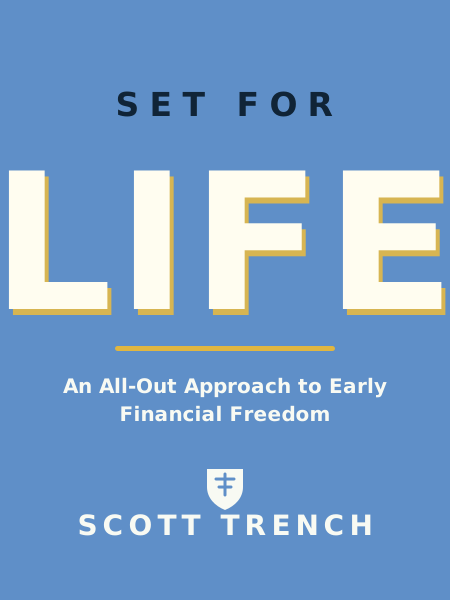
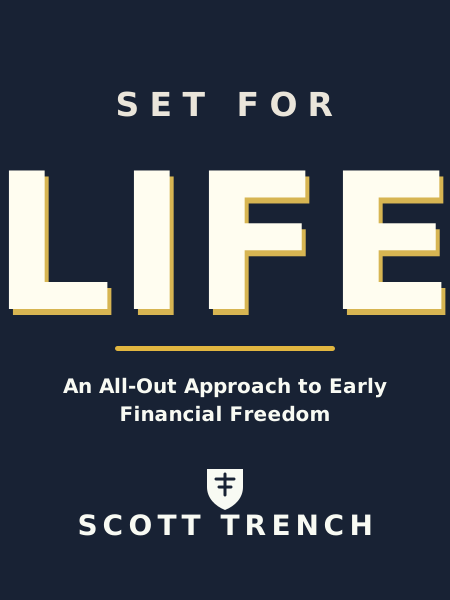
Set for Life
Scott Trench · 2017
Editorial rating
- Evidence
- 6/10
- Actionability
- 9/10
- Originality
- 6/10
The thesis
Financial freedom isn't about getting rich slowly through 401(k) contributions over 40 years - it's about aggressive early action. Save 50%+ of income, house hack to eliminate housing costs, and invest the difference to reach financial independence within 5-10 years.
Who this is for
Young professionals in their 20s and early 30s earning median-to-good incomes who want to escape the paycheck-to-paycheck cycle fast. Particularly suited for single individuals or couples without children willing to make significant lifestyle sacrifices early.
My favorite quote
Your largest expense is your life. Most people never question whether their lifestyle matches their values or their goals.
Why it matters
Most financial advice focuses on cutting lattes. Trench forces you to confront the 80% of spending that actually matters - housing, transportation, and the big recurring costs.
Do this
Calculate your savings rate right now. If it's below 25%, identify one major expense you could restructure (housing, car) rather than minor line items.
Start here
House Hacking is your single biggest lever. Buy a 2-4 unit property, live in one unit, and rent the others to cover your mortgage entirely. This eliminates your largest expense (housing typically consumes 30%+ of income) and forces you to build equity while others subsidize your living costs. The math changes everything: if housing costs nothing, hitting 50%+ savings rate becomes almost automatic.
Critical summary
Trench, CEO of BiggerPockets, writes the financial independence playbook specifically for young professionals. His framework has three stages: build a cash runway ($25K-50K liquid), invest in real estate through house hacking, then scale investments toward passive income exceeding expenses.
The book's greatest strength is its aggressive timeline orientation. Where traditional advice says "contribute 15% to your 401(k) for 40 years," Trench argues for front-loading sacrifice to compress the wealth-building journey to under a decade. He's refreshingly direct about the trade-offs: this requires living below your means aggressively and making unconventional housing choices.
What it gets right
- Math-focused approach showing how savings rate matters more than investment returns
- Specific, actionable chapters on house hacking mechanics
- Recognition that earning more matters as much as spending less
- BiggerPockets integration provides community support for implementation
What it misses
- Controversial advice against maxing 401(k) early (loses employer match, tax advantages)
- House hacking assumes markets where multi-family properties are affordable
- Glosses over execution details - property management, tenant screening, repairs
- Heavily skewed toward young, single individuals; less applicable for families
- Real estate bias from BiggerPockets platform creates conflict of interest
Evidence is primarily author experience and BiggerPockets community case studies. The core math is sound, but specific strategies (avoiding retirement accounts) contradict mainstream financial planning advice for good reason.
Key concepts
House Hacking
Buy multi-unit property, live in one unit, rent others to eliminate housing cost. Start searching on BiggerPockets or Zillow for 2-4 unit properties in your market.
Savings Rate
Percentage of income saved - this determines years to FI more than investment returns. Calculate yours today: (Income - Expenses) / Income.
Financial Runway
$25K-50K liquid cash covering 6-12 months expenses. Build this before investing anything.
Wealth Stages
Stage 1 (Employee), Stage 2 (Saver), Stage 3 (Investor), Stage 4 (Passive Income). Identify your current stage.
The 4% Rule
You need 25x annual expenses invested to retire safely. Calculate your FI number: Annual Expenses × 25.
Core insights
-
Savings rate trumps returns
At 10% savings rate, retirement takes 51 years. At 50%, it takes 17 years. The math is unforgiving - investment returns barely move the needle compared to savings rate.
-
Housing is the only lever that matters at scale
Optimizing coffee and subscriptions saves hundreds; restructuring housing saves tens of thousands annually.
-
Liquidity before investing
Build cash runway first. Without 6+ months expenses liquid, any setback forces you to sell investments at the worst time.
-
Median income is enough
You don't need a six-figure salary. Someone earning $50K saving 50% will outpace someone earning $100K saving 10%.
-
Front-load sacrifice
Two years of aggressive frugality creates options that compound for decades. The inverse - lifestyle inflation early - creates constraints.
Implementation steps
Today
- Calculate your current savings rate (be honest - include everything)
- List your three largest monthly expenses
This week
- Research 2-4 unit properties in your area on Zillow/BiggerPockets
- Open a high-yield savings account if you don't have one
- Calculate your FI number (annual expenses × 25)
This month
- Build or accelerate emergency fund to $10K minimum
- Evaluate housing situation: could you house hack, get roommates, or downsize?
- Track every expense for 30 days to establish baseline
Ongoing
- Maintain 50%+ savings rate
- Increase income through side hustles or job changes annually
- Review and rebalance investments quarterly
Suggested 30-day practice plan
An editorial application plan created by Monolithic Vault - an interpretation of the book's ideas, not part of the original book.
- Day 1
Calculate savings rate and FI number, write both down
- Day 2
Set up expense tracking (spreadsheet or app like YNAB)
- Day 3
Open high-yield savings account, set up automatic transfers
- Day 7
List all subscriptions and recurring charges, cancel 3+ you don't use
- Day 14
Research house hacking - read 5 BiggerPockets forum posts on your market
- Day 21
Meet with mortgage broker to understand pre-approval requirements
- Day 30
Create 1-year financial plan with specific savings rate target and housing goal
Free PDF summary
Take this analysis with you: a designed two-page field-notes sheet with the thesis, my favorite quote, the key concepts and core insights, and the full 30-day checklist. Print it or keep it - free, no signup.
Go deeper
If this analysis earned your attention, the full book goes further than any summary can. The original is always the primary source.