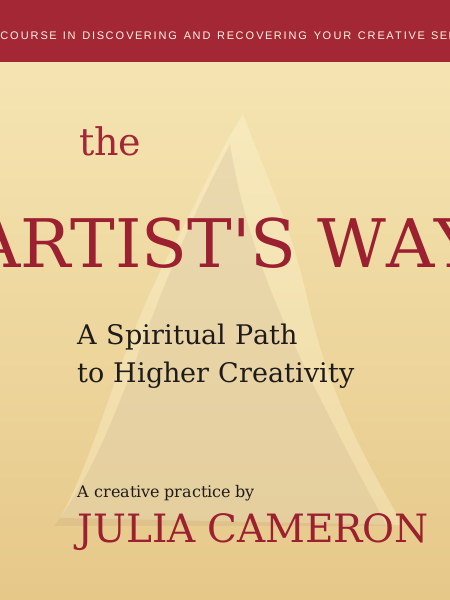
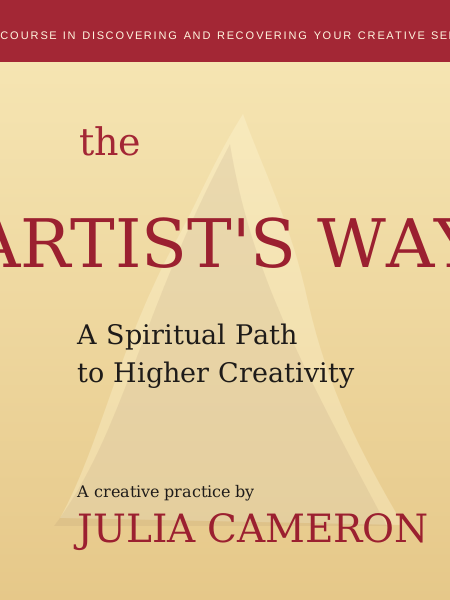
The Artist's Way
Julia Cameron · 1992
Editorial rating
- Evidence
- 4/10
- Actionability
- 9/10
- Originality
- 7/10
The thesis
Everyone is creative, but most adults have been "blocked" by criticism, fear, and societal conditioning. Creative recovery is possible through two simple daily and weekly practices - Morning Pages and Artist Dates - that bypass your inner critic and reconnect you with your "inner artist."
Who this is for
Anyone who once considered themselves creative but stopped, professionals stuck in analytical roles craving creative expression, and people who feel they have "something to say" but can't access it. Not for those already producing consistently - this is a recovery program.
My favorite quote
The desire to create is a sacred impulse.
Why it matters
Cameron reframes creativity from "nice to have" hobby to fundamental human need. This gives permission to prioritize creative work alongside "serious" responsibilities.
Do this
Write for 10 minutes right now about a creative project you've been avoiding. Don't judge - just write. Notice what comes up.
Start here
Morning Pages: Write three pages longhand every morning, first thing, before your analytical mind fully wakes. No editing, no stopping, no judgment. This practice clears mental debris, surfaces buried feelings, and gradually silences your inner critic. Do it daily for 12 weeks regardless of whether you "feel like it" - that's precisely when it works.
Critical summary
Cameron, a screenwriter and recovering alcoholic, designed a 12-week program modeled on AA's spiritual framework. The premise: creativity is natural but gets blocked by fear, criticism, and "creative injuries." Recovery requires consistent practice and spiritual openness.
The two core tools are Morning Pages (three pages of stream-of-consciousness writing every morning) and Artist Dates (solo weekly excursions to refill the creative well). Each week adds specific exercises, affirmations, and reflection prompts.
What it gets right
- Morning Pages genuinely work - the practice surfaces unconscious material
- Artist Dates force self-nurturing often neglected by busy adults
- The "inner artist as child" metaphor helps with self-compassion
- Specific, structured 12-week program provides clear path
- Week of "reading deprivation" is revelatory for many
What it misses
- Heavy spiritual/religious language ("God," "creator") alienates secular readers
- AA-influenced framework feels prescriptive and controlling to some
- Dated examples (wealthy readers, "ethnic neighborhoods" for artist dates)
- Hyperbolic comparisons (equating criticism to abuse, abandoned projects to miscarriages)
- New Age philosophy ("the universe will provide") lacks rigor
- Best for blocked creatives, not for improving already-functional practice
Evidence is primarily Cameron's experience and student testimonials. The techniques align with journaling research but aren't scientifically validated.
Key concepts
Morning Pages
3 pages longhand, every morning, stream of consciousness. The core practice - do it before anything else.
Artist Date
Weekly solo expedition to refill your creative well. Go alone; treat your inner artist to stimulating input.
The Censor
Your inner critic that blocks creative flow. Morning Pages help you identify and eventually quiet it.
Creative Recovery
Treating blocked creativity like recovery from addiction - 12 weeks, structured program, spiritual component.
Filling the Well
Creativity requires input. Artist Dates provide raw material for your subconscious to process.
Creative Injuries
Past criticism, dismissal, or trauma that wounded your creative confidence. Healing these unblocks you.
Core insights
-
Your inner artist is a child
Treat creative impulses with the patience and protection you'd give a young kid. Don't expose them to harsh criticism.
-
Creativity is a spiritual practice
Whether you call it God, universe, or flow - connecting to something larger unblocks creative energy.
-
You can't think your way to creativity
Analysis kills creative flow. Morning Pages and Artist Dates bypass the thinking mind.
-
Input precedes output
If you're not creating, you may be depleted. Fill the well with new experiences before demanding production.
-
Perfectionism is a refusal to move forward
The blocked artist isn't lazy - they're frozen by impossibly high standards.
Implementation steps
Today
- Commit to the 12-week program
- Buy a notebook dedicated solely to Morning Pages
- Set your alarm 30 minutes earlier tomorrow
This week
- Begin Morning Pages daily (3 pages longhand, first thing)
- Schedule your first Artist Date
- Read Week 1 of the book
This month
- Complete Morning Pages every single day (yes, every day)
- Take 4 Artist Dates (one per week)
- Work through the weekly exercises and tasks
Ongoing
- Continue Morning Pages indefinitely (many practitioners never stop)
- Maintain weekly Artist Dates
- Repeat the 12-week program periodically when stuck
Suggested 30-day practice plan
An editorial application plan created by Monolithic Vault - an interpretation of the book's ideas, not part of the original book.
- Day 1
Buy notebook, read introduction and Week 1, set earlier alarm
- Day 2
First Morning Pages session - write 3 pages no matter what
- Day 3
Continue Morning Pages, plan first Artist Date
- Day 7
Complete first Artist Date (solo, at least 2 hours)
- Day 14
Two weeks of Morning Pages complete - notice what's emerging
- Day 21
Begin reading deprivation week (no books, articles, screens as input)
- Day 30
Month complete - review what's shifted in creative output and self-perception
Free PDF summary
Take this analysis with you: a designed two-page field-notes sheet with the thesis, my favorite quote, the key concepts and core insights, and the full 30-day checklist. Print it or keep it - free, no signup.
Go deeper
If this analysis earned your attention, the full book goes further than any summary can. The original is always the primary source.