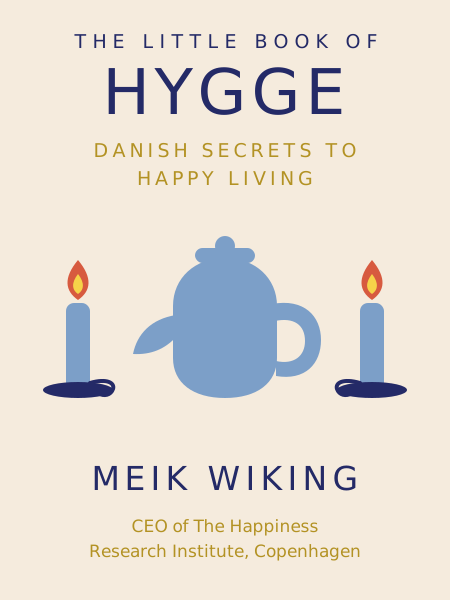
The Little Book of Hygge
Meik Wiking · 2016
Editorial rating
- Evidence
- 5/10
- Actionability
- 7/10
- Originality
- 7/10
The thesis
Everyday well-being improves when time, light, food, and social norms are deliberately arranged so people can lower their guard. Hygge is relationship design disguised as candles and cake.
Who this is for
Busy professionals whose homes feel like recovery stations, remote workers missing informal connection, and hosts who want gatherings to feel warm without becoming expensive performances.
My favorite quote
Hygge is about an atmosphere and an experience, rather than about things.
Why it matters
The line protects hygge from becoming another shopping aesthetic and returns attention to presence, safety, and connection.
Do this
Create one phone-free hour tonight with softer light, a simple drink, and either a person or activity that helps you relax.
Start here
Create one recurring low-effort ritual rather than redesigning your home. Invite a small group, serve uncomplicated food, turn off phones, share the work, and make the evening easy enough to repeat next week.
Critical summary
Meik Wiking founded Copenhagen's Happiness Research Institute in 2013 and published The Little Book of Hygge during the international hygge boom of 2016. He defines hygge less as decoration than as an atmosphere of safety, equality, presence, pleasure, and relaxed connection. The book still spends generous time on candles, warm pools of light, wool, hot drinks, comfort food, fireplaces, books, and weather, but these objects are meant to lower friction and signal that performance can stop. Wiking's Hygge Manifesto names atmosphere, presence, pleasure, equality, gratitude, harmony, comfort, truce, togetherness, and shelter. The social rules matter more than the furniture: share airtime and tasks, avoid boasting, suspend contentious debate, put away phones, and let ordinary food be enough. He extends the idea beyond winter through picnics, cycling, cabins, cooking clubs, board games, and repeated traditions. The strongest practical insight is that happiness often depends on the architecture of recurring moments. A cooking club that distributes preparation and meets regularly may create more connection than an impressive dinner party that exhausts the host and happens once. Hygge therefore works best as a design constraint: keep the group small, the expectations low, the environment comfortable, and attention on the people present.
What it gets right
- Treats close relationships and shared time as more important than status consumption
- Gives concrete environmental cues that make rest and unhurried conversation easier
- Shows how simple recurring rituals create memories and belonging without requiring major life changes
What it overstates or misses
- Connects Danish happiness too confidently to hygge while underplaying social security, public services, trust, and leisure protections
- Risks turning a communal practice into a marketable collection of candles, blankets, pastries, and Scandinavian products
- Gives limited attention to how harmony, small inner circles, and avoiding difficult topics can become exclusion or social conformity
The evidence comes mainly from general happiness research, surveys, cultural observation, and Wiking's anecdotes rather than trials showing that the full hygge package causes lasting well-being. Relationships, leisure, gratitude, and pleasant environments are credible contributors, but national rankings cannot identify hygge as the decisive mechanism. The verdict: a charming manual for better evenings, not a scientific explanation of Danish happiness.
Key concepts
Atmosphere
Use soft, distributed light, physical comfort, and fewer interruptions to signal that vigilance and performance can pause.
Presence
Put away phones and unfinished work so the people or activity in front of you receive undivided attention.
Equality and Harmony
Share preparation, airtime, and status so nobody has to host, impress, compete, or dominate the room.
Togetherness
Build closeness through repeated meals, games, walks, stories, and practical tasks rather than waiting for exceptional occasions.
Shelter
Create a temporary sense of safety from demands outside the gathering without pretending the outside world has disappeared.
Core insights
-
Comfort Is a Social Technology
Light, warmth, food, and seating matter because they change how readily people relax and connect.
-
Repeatable Beats Impressive
A modest ritual that happens every week creates more belonging than a perfect event nobody wants to organize again.
-
Shared Work Improves the Gathering
Cooking and cleaning together reduce host pressure and make participants contributors rather than customers.
-
Presence Requires Exclusion
A hyggelig hour often depends on deliberately excluding phones, deadlines, boasting, and avoidable drama.
-
Harmony Has a Shadow Side
Comfort for the inner circle can become conformity or exclusion when difficult people and subjects are permanently kept outside.
Implementation steps
Today
- Choose one corner or table and remove the brightest light, phone charger, and visible work materials for one hour.
- Schedule a simple recurring ritual involving tea, reading, walking, cooking, or conversation.
This week
- Host one low-effort gathering where every person brings, prepares, or cleans something.
- Spend one evening without multitasking and record which environmental change made presence easiest.
This month
- Create a small set of seasonal rituals that require little money and can survive busy weeks.
- Build a hygge emergency kit using items already owned, such as tea, a blanket, a book, music, and a simple game.
Ongoing
- Protect close relationships with recurring calendar time instead of assuming connection will happen spontaneously.
- Use hygge as a pause from difficult issues, not as a permanent excuse to avoid necessary conflict or unfamiliar people.
Suggested 30-day practice plan
An editorial application plan created by Monolithic Vault - an interpretation of the book's ideas, not part of the original book.
- Day 1
Identify the room, time, and habit that currently make relaxation most difficult at home.
- Day 3
Create one phone-free, softly lit hour using only objects and food you already have.
- Day 7
Hold a simple shared meal or activity with low preparation and equal participation.
- Day 14
Repeat the same ritual and remove one element that made it feel performative or complicated.
- Day 21
Invite someone who is not already part of your closest circle and make the gathering easy to enter.
- Day 30
Choose two rituals worth keeping and place them on the calendar for the next three months.
Free PDF summary
Take this analysis with you: a designed two-page field-notes sheet with the thesis, my favorite quote, the key concepts and core insights, and the full 30-day checklist. Print it or keep it - free, no signup.
Go deeper
If this analysis earned your attention, the full book goes further than any summary can. The original is always the primary source.