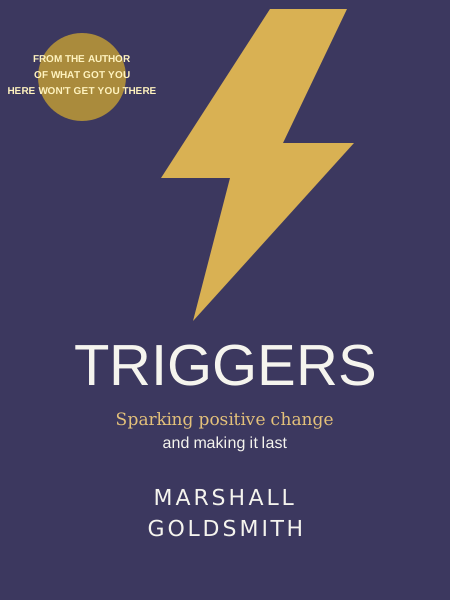
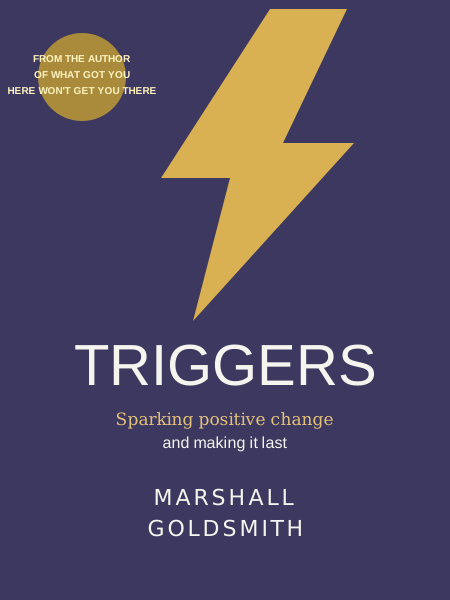
Triggers
Marshall Goldsmith · 2015
Editorial rating
- Evidence
- 7/10
- Actionability
- 9/10
- Originality
- 6/10
The thesis
Our environment constantly triggers us to behave in ways we later regret. That traffic jam makes you snap at your spouse; that critical email derails your afternoon. The gap between who we want to be and who we actually become is explained by these environmental triggers - and closed by relentless self-monitoring. Change requires daily accountability: actively asking yourself whether you did your best to become the person you want to be.
Who this is for
Executives who know what behaviors they need to change but keep falling back into old patterns, professionals whose reactions undermine their relationships, anyone who's set behavioral goals and failed to sustain them, and people who've read plenty of self-improvement books but haven't actually improved.
My favorite quote
We do not get better without structure.
Why it matters
This is Goldsmith's core message distilled. Willpower and good intentions are insufficient. You need systems - daily questions, accountability, explicit tracking - to create lasting change.
Do this
Pick one behavior you want to change. Tonight, ask yourself: "Did I do my best to [behavior] today?" Score yourself 1-10. Repeat tomorrow.
Start here
Ask yourself six "active" questions daily. Not "Was I happy today?" (passive) but "Did I do my best to be happy today?" (active). The shift from environment to effort keeps you accountable even when circumstances work against you. The six questions: Did I do my best to (1) set clear goals, (2) make progress toward those goals, (3) find meaning, (4) be happy, (5) build positive relationships, (6) be fully engaged? Score each 1-10 nightly.
Critical summary
Goldsmith, one of the world's top executive coaches, tackles the question every self-help author eventually faces: why don't people change even when they know what to do? His answer: environmental triggers constantly derail us, and we overestimate our ability to resist them.
The book's core contribution is the "Daily Questions" practice - a structured self-accountability system that forces daily reckoning with your intentions versus your actions. Goldsmith himself has done this for years, with someone calling him nightly to ask 22 personalized questions.
What it gets right
- The planner/doer distinction is insightful: we plan as optimists, then execute as people buffeted by triggers
- "Active" questions (Did I do my best to...) are genuinely more useful than passive questions (Was I...)
- Emphasis on structure over willpower is evidence-based and practical
- Stories from Goldsmith's coaching practice illustrate principles vividly
- The book acknowledges that change is hard and offers systems, not platitudes
What it misses or overstates
- The daily questions practice is demanding - Goldsmith has someone call him every night. Most readers won't sustain this.
- Limited engagement with when triggers can be useful (they're not always enemies)
- Goldsmith's rant against negative book reviews is petty and undermines his credibility as a dispassionate analyst
- Some readers find the executive-coaching anecdotes feel remote from their lives
- The approach is individualistic - doesn't address how to change organizational triggers or social environments
- Repetitive at points; could be condensed
If you struggle with the gap between intention and action, the Daily Questions framework alone is worth the read. Just be prepared: this is demanding practice, not a quick fix.
Key concepts
Triggers
Any stimulus that reshapes our thoughts and actions. Can be internal or external, helpful or harmful. The environment is full of them.
Active vs. Passive Questions
"Did I do my best to..." (active, focuses on effort) vs. "Was I..." (passive, focuses on outcome). Active questions maintain agency.
The Daily Questions
Six (or more) personalized questions you ask yourself nightly, scored 1-10, tracking your effort toward behavioral goals.
Planner vs. Doer
We plan with one mindset (optimistic, rational) and execute with another (reactive, triggered). The gap explains most failures.
Structure
The scaffolding that supports behavioral change. Without explicit systems, we default to old patterns. Structure beats willpower.
Engaging Questions
Questions that measure your effort and commitment, not just outcomes. Keep you accountable even in difficult environments.
Core insights
-
Environment is more powerful than willpower
You can't simply decide to be better. You need systems that account for the triggers you'll inevitably face.
-
"Did I do my best" changes everything
This framing keeps you accountable regardless of circumstances. Bad day? You could still have done your best.
-
We become who we are through daily acts
Change isn't a single decision. It's the accumulation of daily choices. Track them to shape them.
-
Forecasting errors are universal
We predict our future behavior as if triggers won't exist. They will. Plan for the environment you'll actually face.
-
Accountability beats motivation
Having someone ask you daily whether you followed through creates behavior change that inspiration alone cannot.
Implementation steps
Today
- Identify three behaviors you want to change
- Frame them as "Did I do my best to..." questions
- Score yourself on each tonight (1-10)
This week
- Create your own Daily Questions list (6-10 questions covering goals, relationships, wellbeing)
- Score yourself each night before bed
- Notice which triggers consistently derail you
This month
- Find an accountability partner to review your scores weekly
- Identify your worst-performing question; double down on effort there
- Add environmental design: remove or modify triggers where possible
Ongoing
- Maintain daily scoring - the practice only works with consistency
- Adjust questions quarterly as priorities shift
- Remember: you're measuring effort, not just results
Suggested 30-day practice plan
An editorial application plan created by Monolithic Vault - an interpretation of the book's ideas, not part of the original book.
- Day 1
Draft your 6 Daily Questions; score yourself tonight
- Day 2
Notice triggers throughout the day; log which ones derail you
- Day 3
Continue daily scoring; review which questions you're struggling with
- Day 7
Weekly review - what's your average? Which question needs focus?
- Day 14
Add an accountability partner (even a text check-in counts)
- Day 21
Identify one environmental modification that would reduce a harmful trigger
- Day 30
Review the month: have your scores improved? Which behaviors have shifted?
Free PDF summary
Take this analysis with you: a designed two-page field-notes sheet with the thesis, my favorite quote, the key concepts and core insights, and the full 30-day checklist. Print it or keep it - free, no signup.
Go deeper
If this analysis earned your attention, the full book goes further than any summary can. The original is always the primary source.