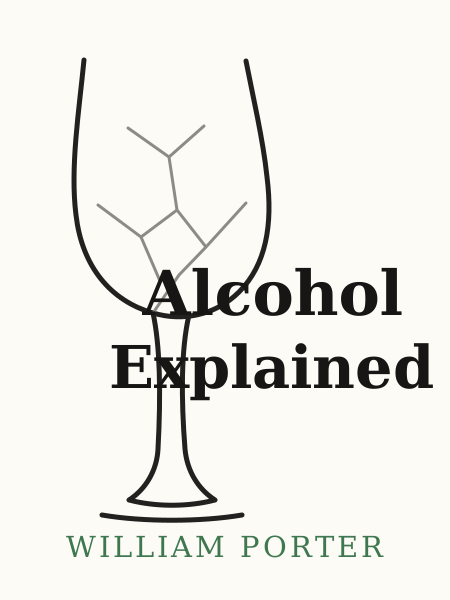
Alcohol Explained
William Porter · 2015
Editorial rating
- Evidence
- 6/10
- Actionability
- 8/10
- Originality
- 7/10
The thesis
Alcohol is a depressant that creates a false sense of relief by suppressing anxiety - anxiety it caused in the first place. Understanding the physiological and psychological mechanisms of alcohol dependency removes its mystique and makes quitting not just possible, but logical.
Who this is for
Anyone questioning their relationship with alcohol, from social drinkers noticing problematic patterns to those struggling with dependency. Especially useful for people who prefer rational, science-based explanations over spiritual or 12-step approaches.
My favorite quote
To control alcohol you have to cease seeing it as something enjoyable. If you no longer want it you have power over it rather than vice versa.
Why it matters
Most people try to moderate while still believing alcohol provides genuine benefit - this keeps them trapped in craving.
Do this
List three things you believe alcohol gives you (relaxation, confidence, fun). Then question whether those benefits are real or just relief from alcohol's own withdrawal.
Start here
Alcohol is both a stimulant and a depressant. The initial "high" lasts 20 minutes; the depressant effect (anxiety, disrupted sleep, low mood) lasts hours and compounds over time. What feels like "needing a drink to relax" is actually needing a drink to relieve the anxiety alcohol created yesterday. Once you see this cycle clearly, the illusion of benefit collapses - and quitting becomes easier than moderating.
Critical summary
Porter, a former lawyer and paratrooper who quit after 25 years of drinking, wrote this to demystify alcohol dependency. The book explains how alcohol affects the brain's reward system, sleep architecture, and emotional regulation - without requiring medical background to understand.
The central framework: Alcohol disrupts homeostasis. Your body compensates for alcohol's depressant effect by releasing stimulants (adrenaline, cortisol). When alcohol wears off, these stimulants remain, causing anxiety and restlessness. Drinking again provides temporary relief from withdrawal, creating the illusion that alcohol "helps" anxiety when it's actually the cause.
What it gets right
- Clear explanation of the stimulant/depressant cycle without medical jargon
- Challenges the moderation myth: if you genuinely didn't want alcohol, why moderate at all?
- Addresses "fading affect bias" - how memory selectively forgets bad drinking experiences
- Practical focus on changing perception rather than willpower
What it misses
- Limited engagement with genetic/biological predisposition to alcoholism
- Dismisses AA rather summarily (AA works for many, even if Porter didn't need it)
- Oversimplifies complex addiction neuroscience - presents theories as definitive facts
- Repetitive structure (Goodreads reviewers note: same points made repeatedly)
Evidence quality: Primarily Porter's personal experience and interpretations of general neuroscience. Not peer-reviewed research. The physiological explanations are directionally correct but lack citation. Better than pure anecdote, weaker than academic rigor.
Reddit/Goodreads consensus: r/stopdrinking calls it a "game-changer" for many. Goodreads: 4.35/5 (4,200+ ratings). Criticized for repetitiveness and dogmatic tone, but praised for practical clarity. NHS mental health workers recommend it. Comparable to Annie Grace's This Naked Mind but more focused on physiology than psychology.
Key concepts
Stimulant/Depressant Cycle
Alcohol initially stimulates then depresses. Body compensates with stimulants that outlast the alcohol, causing withdrawal anxiety. Track your mood 2 hours vs. 8 hours after drinking - notice the pattern.
Fading Affect Bias
Memory filters out most mediocre drinks, remembers only the "good" ones. Keep a drinking diary for 2 weeks - reality check against selective memory.
Illusion of Benefit
Alcohol doesn't create relaxation or confidence - it temporarily removes the anxiety it caused. Test this by tracking anxiety levels after 7 days without alcohol.
Moderation Is Harder Than Quitting
Moderating requires constant vigilance and craving management. Quitting (once you stop seeing alcohol as beneficial) eliminates the mental battle. Decide: control alcohol or be controlled by it.
Sleep Disruption
Alcohol suppresses REM sleep, causing early morning waking and poor sleep quality. Track sleep via app for 1 week before and after quitting - see the difference.
The Best Time Is Now
Every day you delay is another day wasted. Stop negotiating with yourself and commit today.
Core insights
-
Alcohol creates the problem it pretends to solve
The anxiety you drink to relieve is withdrawal from previous drinks. Break the cycle and the "need" disappears.
-
Withdrawal peaks at 3-5 days, then rapidly improves
Most people overestimate how bad withdrawal will be. Physical discomfort is temporary; freedom is permanent.
-
You can't unsee the truth
Once you understand alcohol's actual mechanism, the spell is broken. Drinking while knowing it's a trap feels absurd.
-
Sleep quality transforms sobriety
Broken sleep from alcohol affects everything - mood, energy, decision-making. Within 2 weeks sober, sleep normalizes and life improves dramatically.
-
Moderation keeps you a prisoner
Every "just one drink" requires justification, negotiation, and eventual failure. Quitting is liberation from constant internal debate.
Implementation steps
Today
- Read the first 5 chapters free on alcoholexplained.com to preview the framework
- Track today's alcohol consumption honestly: how much, when, why
This week
- Monitor withdrawal symptoms (if drinking daily): anxiety, restlessness, sleep disruption. Notice the pattern Porter describes.
- Experiment: Skip alcohol for 3 days. Observe how "needing a drink" changes day by day.
This month
- Commit to 30 days alcohol-free to reset baseline and test the book's claims
- Join r/stopdrinking for community support (100K+ members who've used this approach)
- Document sleep quality, mood, energy weekly - see the transformation Porter promises
Ongoing
- Reframe cravings: not as "I want a drink" but as "my body is clearing alcohol's effects"
- Avoid "maybe just one" thinking - decision already made, no negotiation needed
- If relapse happens, don't catastrophize - restart immediately, no waiting for Monday/New Year
Suggested 30-day practice plan
An editorial application plan created by Monolithic Vault - an interpretation of the book's ideas, not part of the original book.
- Day 1
Read Alcohol Explained (or listen to audiobook). Understand the cycle intellectually.
- Day 2
Notice withdrawal symptoms without drinking. Recognize them as Porter describes: temporary, not dangerous.
- Day 3
Peak physical discomfort (for daily drinkers). Remind yourself: this is alcohol leaving, not proof you need it.
- Day 5
Withdrawal should be easing. Notice any anxiety reduction as body rebalances.
- Day 7
First checkpoint - sleep improving? Track it. Mood stabilizing?
- Day 14
Mid-point reflection. Compare current state to Day 1. Read book's later chapters on benefits.
- Day 21
Three weeks - brain fog lifting, energy returning. Document changes in journal.
- Day 30
Full month sober. Decision point: Does alcohol still seem "beneficial"? Or was Porter right?
Free PDF summary
Take this analysis with you: a designed two-page field-notes sheet with the thesis, my favorite quote, the key concepts and core insights, and the full 30-day checklist. Print it or keep it - free, no signup.
Go deeper
If this analysis earned your attention, the full book goes further than any summary can. The original is always the primary source.