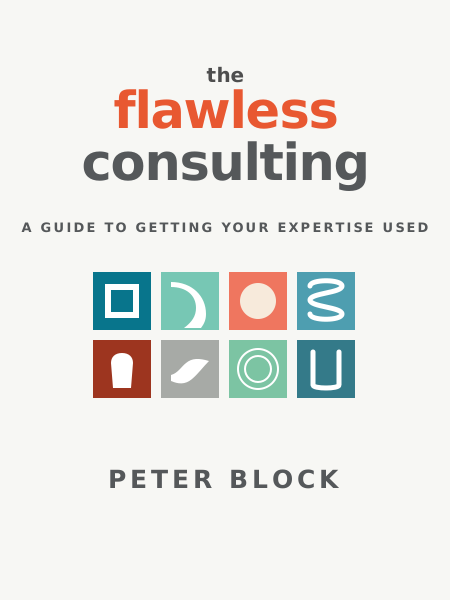
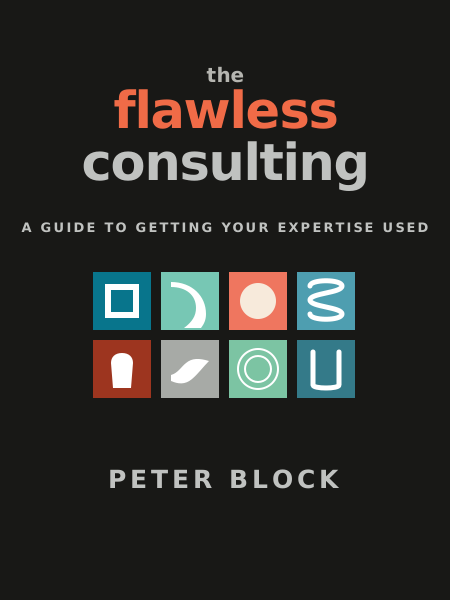
Flawless Consulting
Peter Block · 1981
Editorial rating
- Evidence
- 6/10
- Actionability
- 9/10
- Originality
- 8/10
The thesis
Expertise creates little value when clients do not trust the relationship, own the diagnosis, or commit to implementation. Effective consulting therefore depends as much on authentic contracting and shared responsibility as on technical correctness.
Who this is for
External consultants, BI specialists, HR partners, project leads, and internal advisors who must influence managers and stakeholders without having direct authority over implementation.
My favorite quote
Being right is not enough. You need enough leverage to have your point of view considered.
Why it matters
A technically correct recommendation is useless when the relationship gives the consultant no credible path to influence action.
Do this
Before your next client meeting, write down one thing you want from the client and one thing you are prepared to offer.
Start here
Treat the initial contracting conversation as real consulting work, not administration before the work begins. Clarify the client's wants, your wants, each side's responsibilities, the limits of confidentiality, and the conditions required for success before agreeing to the assignment.
Critical summary
Peter Block defines consulting broadly: whenever you try to change or improve a situation without direct control over implementation, you are acting as a consultant. His five-phase model moves from entry and contracting through discovery, feedback and a decision to act, implementation, and eventual extension or termination. The book concentrates heavily on the early phases because a weak contract poisons everything that follows. Block asks consultants to negotiate wants and offers explicitly, clarify responsibility on both sides, and decide whether they are serving as an expert, a pair of hands, or a collaborative partner. He favors collaboration because it combines the consultant's expertise with the client's knowledge and ownership. During discovery, the consultant should investigate not only the technical problem but also how the client organization contributes to it. Feedback must compress the data, name the underlying problem, disclose the consultant's own experience of the relationship, and leave space for the client's choice. Resistance is treated as information, often an indirect expression of concern, loss of control, vulnerability, or disagreement that should be named without punishment.
What it gets right
- Makes the consulting relationship part of the diagnosis instead of pretending that technical analysis occurs outside power, anxiety, and organizational politics
- Provides concrete language for negotiating scope, responsibility, access, confidentiality, boundaries, and difficult feedback before resentment develops
- Treats client ownership as necessary for implementation, reducing the common pattern where consultants produce an excellent answer nobody uses
What it overstates or misses
- Collaboration is not always the best role when regulation, crisis, safety, or scarce specialist knowledge requires a firmer expert recommendation
- The relational emphasis can underplay whether the consultant's technical method, data, and domain assumptions are actually correct
- The framework rests mainly on Block's experience, cases, and workshop practice rather than controlled evidence comparing consulting approaches
The evidence is experiential, but the book has endured because its situations are painfully recognizable: vague requests, hidden decision-makers, passive resistance, withheld data, and projects accepted despite poor odds of success. Its strongest contribution is not a universal process diagram but a discipline of saying what is happening in the relationship while there is still time to change it. This is the consulting book to read when correct analysis keeps failing to produce committed action.
Key concepts
Collaborative Role
Combine the consultant's expertise with the client's knowledge and responsibility so the solution is credible and owned internally.
Contracting
Agree on wants, offers, roles, boundaries, access, confidentiality, time, and responsibility before beginning discovery work.
Presenting Problem
Treat the client's first explanation as an entry point, not necessarily the full technical or organizational problem.
Resistance
Recognize avoidance, excessive detail, silence, compliance, or sudden objections as indirect information that deserves an honest conversation.
Flawless Consultation
Behave consistently with your beliefs and feelings, independent of whether the client accepts every recommendation.
Core insights
-
The Relationship Mirrors the Organization
How a client manages you often reveals how responsibility, conflict, and accountability operate elsewhere in the system.
-
Unspoken Expectations Become Scope Problems
Wants that are not negotiated early return later as frustration, rework, delay, or accusations.
-
Diagnosis Must Include Client Contribution
A problem is rarely sustained by process alone; incentives, management behavior, and avoided conversations often keep it alive.
-
Resistance Is Not the Enemy
Naming resistance calmly can reveal the real concern and restore choice without forcing agreement.
-
Implementation Requires Ownership
Recommendations stick when clients participate in defining the problem and decide what they are willing to do.
Implementation steps
Today
- Write a two-column list of what you want from one client and what you are offering in return.
- Identify one current project where you are acting as an expert, pair of hands, or collaborator and decide whether that role is explicit.
This week
- Hold a contracting conversation covering objectives, responsibilities, access, confidentiality, boundaries, timing, and how disagreements will be handled.
- Practice naming one form of resistance neutrally, such as "You agree in the meeting, but the agreed data has not arrived."
This month
- Add a relationship section to your discovery process that examines ownership, incentives, communication patterns, and the client's contribution to the problem.
- Redesign one feedback meeting so the core issue, supporting data, organizational implications, and client choice are all addressed directly.
Ongoing
- Decline or renegotiate assignments where access, sponsorship, responsibility, or the probability of implementation is too weak.
- Debrief each engagement on both technical quality and the health of the consultant-client relationship.
Suggested 30-day practice plan
An editorial application plan created by Monolithic Vault - an interpretation of the book's ideas, not part of the original book.
- Day 1
Choose one live engagement and document the current contract, including every important assumption that has not been spoken aloud.
- Day 3
Discuss wants, offers, roles, and responsibility with the client and record any points that need renegotiation.
- Day 7
Map the presenting problem, the likely underlying problem, and how the client organization may be sustaining it.
- Day 14
Conduct one discovery interview that includes direct questions about trust, incentives, ownership, and avoided conflict.
- Day 21
Deliver concise feedback, name any resistance you observe, and ask the client to choose the next action.
- Day 30
Review the engagement and create a reusable contracting checklist based on what improved access, honesty, and commitment.
Free PDF summary
Take this analysis with you: a designed two-page field-notes sheet with the thesis, my favorite quote, the key concepts and core insights, and the full 30-day checklist. Print it or keep it - free, no signup.
Go deeper
If this analysis earned your attention, the full book goes further than any summary can. The original is always the primary source.