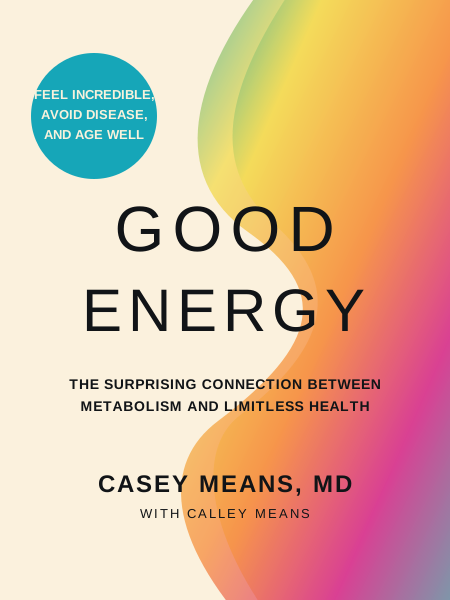
Good Energy
Casey Means · 2024
Editorial rating
- Evidence
- 6/10
- Actionability
- 8/10
- Originality
- 6/10
The thesis
Metabolic dysfunction is the hidden root cause of most chronic diseases - from diabetes to depression, heart disease to infertility. By optimizing how your cells produce and use energy through food, movement, sleep, and stress management, you can prevent and reverse these conditions at their source.
Who this is for
Professionals experiencing unexplained fatigue, brain fog, or weight gain despite "doing everything right." Anyone frustrated with symptom-focused medicine who wants to understand the underlying system. Health-conscious people wanting a unified framework for nutrition decisions.
My favorite quote
We are not sick because we have diseases. We have diseases because we are sick.
Why it matters
This inverts conventional medicine's approach. Instead of treating symptoms, address the metabolic dysfunction that enables multiple diseases simultaneously.
Do this
Check your fasting glucose and triglycerides at your next blood test. If glucose is above 90 or triglycerides above 100, your metabolism needs attention.
Start here
Focus on blood sugar stability: The single most actionable change is eliminating blood sugar spikes. Eat protein and fiber before carbohydrates at every meal, choose whole foods over processed, and move for 10 minutes after eating. This alone addresses the metabolic dysfunction underlying most chronic symptoms.
Critical summary
Casey Means, a Stanford-trained surgeon, left medicine to focus on metabolic health. Her core argument: 93.2% of Americans are metabolically unhealthy, and this dysfunction underlies conditions we treat as separate diseases. Fix the metabolism, and symptoms resolve.
The book presents a unified theory of chronic disease rooted in mitochondrial function - how efficiently your cells convert food to energy. When this process breaks down (from processed food, sedentary behavior, poor sleep, chronic stress), inflammation rises and disease follows.
What it gets right
- Compelling synthesis of metabolic health research into accessible framework
- Practical focus on blood sugar management with specific techniques
- Addresses the full lifestyle picture (food, movement, sleep, stress, toxins)
- Empowers readers to take control rather than wait for medical intervention
- Lab values to request and optimal ranges are immediately useful
What it misses
- Oversimplifies disease causation - depression has many causes beyond metabolic dysfunction
- Demanding protocols few will sustain long-term
- Some claims (e.g., "metabolic health causes depression") overstate the evidence
- Doesn't adequately address genetic and environmental factors beyond individual control
- The "toxic world" framing can induce anxiety that undermines the stress-reduction message
The book is strongest as a framework for understanding metabolic health and weakest when claiming this framework explains everything. Use it as one lens, not the only lens.
Key concepts
Good Energy vs. Bad Energy
Efficient mitochondrial function (good) vs. dysfunction from processed foods and lifestyle (bad). Audit your energy sources.
Metabolic Dysfunction
Impaired ability to convert food to cellular energy. Underlies obesity, diabetes, heart disease, and more.
Mitochondria
Cellular powerhouses that determine your energy levels. Optimize through food quality and lifestyle.
Blood Sugar Stability
Avoiding spikes and crashes. The foundation of metabolic health - track with CGM or postprandial testing.
The Five Pillars
Food, movement, sleep, stress, and environmental toxins. All must be addressed for metabolic health.
Biomarker Optimization
Fasting glucose, HbA1c, triglycerides, HDL - specific numbers to target beyond "normal" ranges.
Core insights
-
"Normal" lab values aren't optimal
Reference ranges include sick people. Aim for optimal, not just normal. Fasting glucose under 90, not under 100.
-
Processed food is the primary driver
Ultra-processed food creates metabolic chaos. The intervention isn't a diet - it's eating real food.
-
Movement after meals matters
A 10-minute walk after eating can reduce glucose spikes by 30%. Timing matters as much as duration.
-
Sleep deprivation is metabolically destructive
One night of poor sleep reduces insulin sensitivity. Prioritize sleep over early gym sessions.
-
Your environment is metabolically relevant
Endocrine disruptors in plastics, cleaning products, and personal care products affect metabolism. Audit your exposures.
Implementation steps
Today
- Check your pantry: identify and remove ultra-processed foods (>5 ingredients or unrecognizable ingredients)
- Eat protein before carbohydrates at your next meal
This week
- Request comprehensive bloodwork: fasting glucose, HbA1c, fasting insulin, triglycerides, HDL, LDL
- Take a 10-minute walk after at least one meal per day
This month
- Establish consistent sleep schedule (same wake time daily, 7-8 hours)
- Audit household products for endocrine disruptors (EWG.org database)
Ongoing
- Default to whole foods; treat processed food as occasional exception
- Maintain post-meal movement habit
- Retest biomarkers every 3-6 months to track progress
Suggested 30-day practice plan
An editorial application plan created by Monolithic Vault - an interpretation of the book's ideas, not part of the original book.
- Day 1
Audit pantry and remove ultra-processed foods; make grocery list of whole foods
- Day 2
Begin eating protein/fiber before carbohydrates at every meal
- Day 3
Start 10-minute post-dinner walks
- Day 7
Schedule comprehensive bloodwork; establish consistent sleep/wake times
- Day 14
Review and optimize one environmental factor (water filter, cleaning products, or food storage)
- Day 21
Assess energy levels, sleep quality, and cravings - adjust as needed
- Day 30
Get bloodwork results; compare to optimal ranges and identify focus areas
Free PDF summary
Take this analysis with you: a designed two-page field-notes sheet with the thesis, my favorite quote, the key concepts and core insights, and the full 30-day checklist. Print it or keep it - free, no signup.
Go deeper
If this analysis earned your attention, the full book goes further than any summary can. The original is always the primary source.