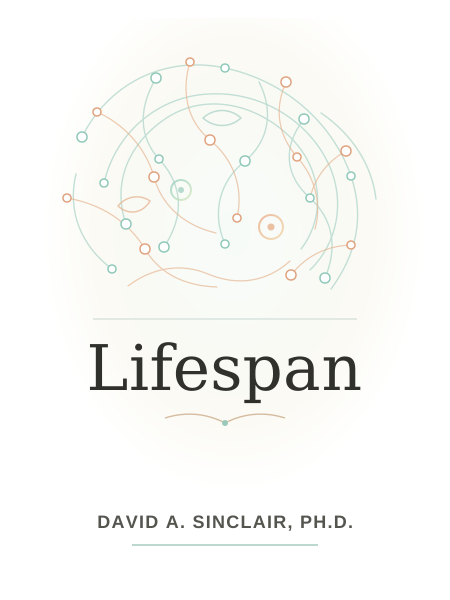
Lifespan
David Sinclair · 2019
Editorial rating
- Evidence
- 5/10
- Actionability
- 6/10
- Originality
- 8/10
The thesis
Aging is not inevitable - it's a disease, and diseases can be treated. The root cause is epigenetic information loss: as we age, our cells "forget" their identity. By activating longevity genes (sirtuins) through stress and lifestyle interventions, we can slow and potentially reverse biological aging.
Who this is for
Health-conscious professionals curious about longevity science, biohackers willing to experiment with supplements and lifestyle changes, and anyone who wants a framework for thinking about aging beyond "eat well and exercise."
My favorite quote
There is no biological law that says we must age.
Why it matters
This challenges the fatalistic assumption that decline is inevitable. Whether or not you agree, the reframe changes how you approach health decisions.
Do this
Get a baseline: measure your fasting glucose, triglycerides, and blood pressure. These are early markers of metabolic aging you can track.
Start here
Activate your longevity genes through hormetic stress: Brief exposures to cold, heat, fasting, and exercise trigger cellular survival pathways that make you more resilient. Your body evolved to respond to scarcity; abundance makes it complacent. Occasional discomfort is the signal that tells your cells to maintain themselves.
Critical summary
David Sinclair is a Harvard geneticist who has spent decades researching sirtuins - proteins that regulate cellular health and longevity. His "Information Theory of Aging" proposes that aging results from epigenetic noise: as DNA repair accumulates, cells lose the epigenetic markers that tell them what type of cell to be. A liver cell starts acting like it's partly a lung cell. Dysfunction follows.
The book is genuinely exciting in its ambition. Sinclair argues we're close to treating aging like any other disease, with interventions ranging from lifestyle changes to gene therapy. He discusses his personal regimen (NMN supplements, metformin, resveratrol, intermittent fasting) with an evangelical zeal.
What it gets right
- The conceptual shift from "aging is natural" to "aging is a problem to solve" is powerful
- Explanation of cellular mechanisms is accessible and fascinating
- Lifestyle recommendations (fasting, cold exposure, exercise) are well-supported by other research
- Thoughtful discussion of societal implications of extended lifespan
What it misses
- Sinclair's claims about sirtuins and resveratrol have been heavily contested - GSK spent billions on sirtuin activators and failed
- Significant conflicts of interest (Sinclair has financial stakes in supplement companies)
- The "Information Theory of Aging" is his theory, not consensus science
- Supplement recommendations (NMN, resveratrol) lack robust human trials
- Some critics call this "influential misinformation" - overstatement of preliminary findings
The book is part visionary science, part marketing. Treat specific supplement claims skeptically, but the broader framework and lifestyle recommendations have value.
Key concepts
Information Theory of Aging
Aging is epigenetic information loss - cells forget their identity. Address this, and you address aging.
Sirtuins
Longevity genes activated by stress. Sinclair's primary research focus (and source of controversy).
Hormesis
Beneficial stress - cold, heat, fasting, exercise - that triggers cellular repair mechanisms.
NAD+
A molecule that declines with age and is essential for sirtuin function. NMN is a precursor Sinclair takes.
Epigenetic Reprogramming
Yamanaka factors can potentially reset cells to younger states - promising but early-stage.
Biological vs. Chronological Age
Your body may be older or younger than your birth certificate suggests. Measurable through biomarkers.
Core insights
-
Aging is the root cause, not the symptoms
Heart disease, cancer, Alzheimer's - these are downstream effects of aging. Address aging itself.
-
Your body wants scarcity signals
Evolution optimized us for intermittent stress. Constant abundance accelerates aging.
-
Eat less, live longer
Caloric restriction extends lifespan in virtually every organism studied. Intermittent fasting mimics this.
-
Cold exposure activates brown fat
Brief cold triggers metabolic changes that may slow aging. No need for ice baths - even cool temperatures help.
-
Exercise remains the best intervention
Whatever supplements may or may not work, consistent exercise has the most robust longevity evidence.
Implementation steps
Today
- Skip one meal (try intermittent fasting with a 16-hour window)
- End your shower with 30 seconds of cold water
This week
- Get baseline bloodwork: fasting glucose, HbA1c, triglycerides, lipid panel
- Reduce animal protein intake for 3-4 days (mimics fasting at cellular level)
This month
- Establish consistent exercise routine (150+ minutes/week moderate intensity)
- Research biological age tests (epigenetic clocks) if you want deeper tracking
Ongoing
- Maintain intermittent fasting as default eating pattern
- Prioritize sleep - sleep deprivation accelerates biological aging
- Be skeptical of supplement claims; wait for human trial data
Suggested 30-day practice plan
An editorial application plan created by Monolithic Vault - an interpretation of the book's ideas, not part of the original book.
- Day 1
Begin 16:8 intermittent fasting (eat within 8-hour window)
- Day 2
Add cold exposure at end of shower (30 seconds)
- Day 3
Review your current exercise routine - commit to 5 sessions/week
- Day 7
Schedule bloodwork to establish baseline biomarkers
- Day 14
Research and consider a biological age test (TruAge, GrimAge, etc.)
- Day 21
Evaluate: How do you feel? Energy levels? Sleep quality?
- Day 30
Review bloodwork results. Identify one metric to focus on improving.
Free PDF summary
Take this analysis with you: a designed two-page field-notes sheet with the thesis, my favorite quote, the key concepts and core insights, and the full 30-day checklist. Print it or keep it - free, no signup.
Go deeper
If this analysis earned your attention, the full book goes further than any summary can. The original is always the primary source.