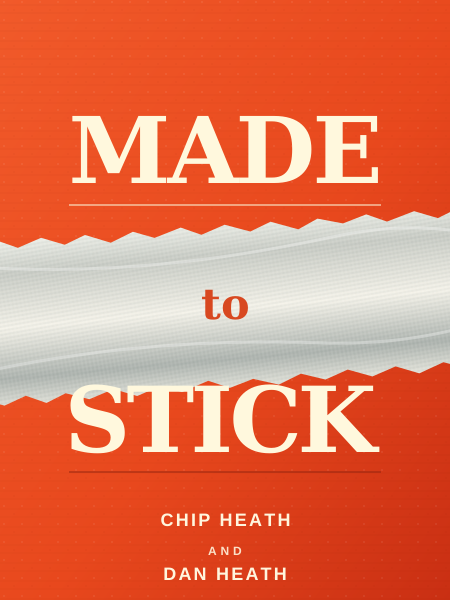
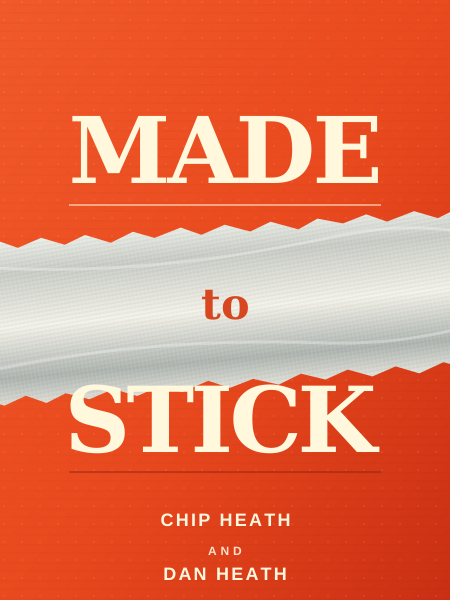
Made to Stick
Chip & Dan Heath · 2007
Editorial rating
- Evidence
- 9/10
- Actionability
- 10/10
- Originality
- 8/10
The thesis
Ideas that "stick" - meaning they are understood, remembered, and change something - share a common set of traits. By following the SUCCESS framework, you can transform any complex idea into a sticky one. The "Curse of Knowledge" is the primary enemy of clear communication.
Who this is for
Teachers, marketers, leaders, and anyone who needs to pitch an idea or explain a complex concept.
My favorite quote
The most basic way to get someone's attention is this: Break a pattern.
Why it matters
It highlights the "Unexpectedness" principle. Our brains are wired to ignore the predictable.
Do this
Review your next presentation. Find the driest part and add a "mystery" or a surprising fact to the beginning.
Start here
Use the SUCCESS Checklist for your ideas: Simple: Find the core of the idea. Unexpected: Grab attention by surprising people. Concrete: Use sensory language; avoid abstraction. Credible: Use vivid details and "anti-authorities." Emotional: Make them care (WIIFY - What's In It For You). Stories: Provide a mental simulation and inspiration.
Critical summary
The Heath brothers deconstruct why urban legends and conspiracy theories spread easily while important scientific or business ideas often fail. The answer is rarely the quality of the idea, but the packaging of it. They provide a toolkit to fight the "Curse of Knowledge" - the difficulty we have imagining what it's like not to know something we already know.
Key concepts
The Curse of Knowledge
Once we know something, we find it hard to imagine not knowing it. This makes us use jargon and abstraction.
Concreteness
The "Velcro" of the brain. Abstract ideas have nothing to latch onto. Concrete details (like a kidney in a bathtub) stick.
The Gap Theory of Curiosity
Open a gap in people's knowledge, and they will feel an itch to close it.
Implementation steps
Today
- Concrete Reframe: Take one abstract sentence from your website or bio and rewrite it so a 5th grader can visualize it.
This week
- The Mystery Opener: Start your next meeting by posing a riddle or a problem that won't be solved until the end.
This month
- SUCCESS Audit: Review all your marketing materials and rate them against the SUCCESS checklist.
Ongoing
- Fight the Curse of Knowledge: Before every presentation, explain your idea to someone unfamiliar with it.
Suggested 30-day practice plan
An editorial application plan created by Monolithic Vault - an interpretation of the book's ideas, not part of the original book.
- Day 1
Identify the core of your most important idea (Simple).
- Day 7
Add an unexpected element to your standard pitch.
- Day 14
Rewrite one abstract concept using concrete, sensory language.
- Day 21
Add an emotional hook - make people care about your idea.
- Day 30
Craft a story that demonstrates your idea in action.
Free PDF summary
Take this analysis with you: a designed two-page field-notes sheet with the thesis, my favorite quote, the key concepts and core insights, and the full 30-day checklist. Print it or keep it - free, no signup.
Go deeper
If this analysis earned your attention, the full book goes further than any summary can. The original is always the primary source.