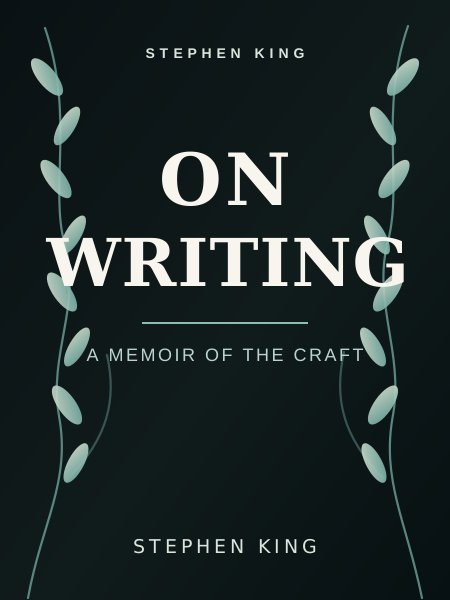
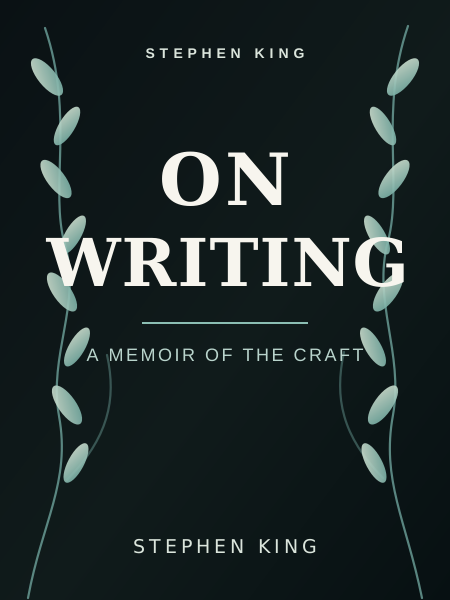
On Writing
Stephen King · 2000
Editorial rating
- Evidence
- 7/10
- Actionability
- 9/10
- Originality
- 8/10
The thesis
Good writing is built less by inspiration than by reading widely, writing consistently, telling the truth of the imagined situation, and cutting whatever exists only to impress the writer.
Who this is for
Fiction writers with unfinished drafts, professionals who overwrite simple ideas, and aspiring authors who need a working routine more than another theory of creativity.
My favorite quote
The scariest moment is always just before you start.
Why it matters
Resistance feels largest before the first sentence, while actual writing quickly replaces vague fear with solvable problems.
Do this
Open your current draft and write continuously for ten minutes without revising the opening line.
Start here
Read a lot and write a lot. King rejects shortcuts because regular exposure trains your ear while regular production reveals weaknesses no workshop can diagnose in theory. Protect a daily writing appointment and let volume become your teacher.
Critical summary
Stephen King combines memoir, craft advice, and an account of the 1999 accident that nearly killed him. The autobiographical material explains the practical rules: years of rejection taught persistence, newspaper work taught compression, addiction showed the cost of romanticizing the damaged artist, and commercial success did not remove the need for a closed door and a daily word target. His central metaphor is the writer's toolbox. Vocabulary and grammar sit on the top shelf, while structure, description, dialogue, theme, revision, and reading are tools learned through repeated use rather than abstract instruction.
What it gets right
- Connects a sustainable writing routine to actual output instead of treating inspiration as a prerequisite
- Explains why concrete nouns, active verbs, honest dialogue, and disciplined cutting usually strengthen prose
- Frames story as discovered through characters and situations rather than mechanically imposed from a plot diagram
What it overstates or misses
- King's distrust of plotting reflects his own method and can mislead writers who work better with structure
- Advice based on literary fiction and novels transfers imperfectly to research, business writing, or collaborative formats
- His confidence sometimes turns preferences about adverbs, symbolism, and workshops into universal laws
The evidence is a successful writer's long practice, supported by before-and-after examples and unusually candid accounts of failure. It is not research, and King does not pretend that every writer should copy his schedule or production volume. The strongest sections are concrete: place the desk away from the center of your life, write with the door closed, revise with it open, remove roughly ten percent, and give the ideal reader a clear experience. The memoir matters because it strips away the myth that professional writing feels consistently noble. Work can be joyful, tedious, frightening, and still worth doing. The accident section also proves the larger claim: writing helped King return to ordinary life because the practice mattered beyond publication. The verdict: the most useful writing manual for building a working life, even when its rules deserve argument.
Key concepts
The Toolbox
Build reliable command of vocabulary, grammar, sentence structure, description, dialogue, and revision before chasing stylistic tricks.
Closed Door, Open Door
Draft privately to protect the story, then revise for the reader once the complete shape exists.
The Ideal Reader
Imagine one trusted reader whose reactions help you judge clarity, pacing, humor, and emotional impact.
Situation Before Plot
Put believable characters into pressure and follow their choices rather than forcing every event through a rigid outline.
Second Draft Formula
Tighten the first draft by about ten percent so scenes move faster and every paragraph earns its place.
Core insights
-
Routine beats mood
A fixed place and daily target reduce negotiation with yourself and make starting less dramatic.
-
Reading trains instinct
Wide reading exposes weak prose, expands possible techniques, and teaches rhythm faster than rules alone.
-
Description needs selection
Give readers the few details that create the scene and trust them to complete the picture.
-
Dialogue reveals character
Let people speak according to who they are, including discomfort and roughness, rather than protecting them from judgment.
-
Revision serves the reader
Remove explanation, decoration, and backstory that pleased the writer but slows the experience.
Implementation steps
Today
- Set a ten-minute timer and continue one scene or section without editing earlier sentences.
- Delete three unnecessary adverbs or passive constructions from yesterday's writing.
This week
- Schedule five protected writing sessions with a small word or time target you can reliably meet.
- Read twenty pages daily from work inside and outside your preferred genre.
This month
- Complete a first draft with minimal external feedback, then leave it untouched for several days.
- Revise the draft for one ideal reader and attempt a ten percent reduction in length.
Ongoing
- Keep writing and reading on the calendar instead of waiting for available time.
- Maintain a rejection and submission log so publication outcomes stay separate from the day's work.
Suggested 30-day practice plan
An editorial application plan created by Monolithic Vault - an interpretation of the book's ideas, not part of the original book.
- Day 1
Choose a fixed writing place, daily session time, and minimum output target.
- Day 3
Remove distractions from the writing space and complete three consecutive sessions.
- Day 7
Review your output without rewriting it and identify where momentum repeatedly slows.
- Day 14
Finish a complete scene, chapter, article, or story with the door metaphorically closed.
- Day 21
Let the draft rest while reading one strong work and noting five craft decisions.
- Day 30
Revise for your ideal reader, cut unnecessary material, and prepare the work for feedback or submission.
Free PDF summary
Take this analysis with you: a designed two-page field-notes sheet with the thesis, my favorite quote, the key concepts and core insights, and the full 30-day checklist. Print it or keep it - free, no signup.
Go deeper
If this analysis earned your attention, the full book goes further than any summary can. The original is always the primary source.