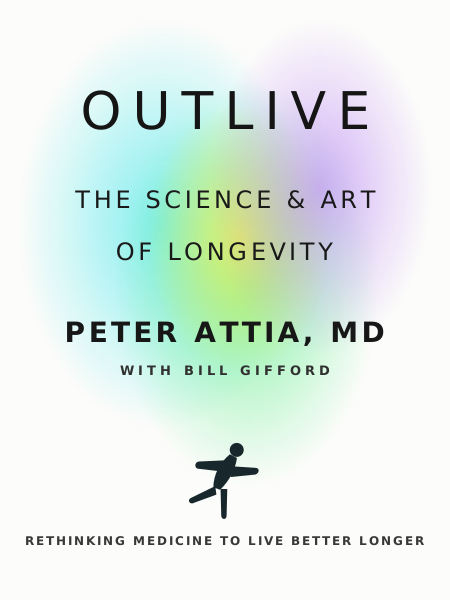
Outlive
Peter Attia · 2023
Editorial rating
- Evidence
- 8/10
- Actionability
- 7/10
- Originality
- 7/10
The thesis
Longevity medicine should shift from reactive treatment to proactive prevention - what Attia calls "Medicine 3.0." By addressing the root causes of the "Four Horsemen" (heart disease, cancer, diabetes, and neurodegenerative disease) decades before symptoms appear, we can dramatically extend both lifespan and healthspan.
Who this is for
Health-conscious professionals in their 30s-50s who want evidence-based strategies for long-term vitality, executives willing to invest significantly in preventive health optimization, and anyone frustrated with conventional medicine's "wait until it breaks" approach.
My favorite quote
The time to repair the roof is when the sun is shining.
Why it matters
Borrowed from JFK, this captures the entire Medicine 3.0 philosophy - prevention while healthy beats treatment while sick.
Do this
Schedule one preventive health screening this month that you've been putting off (DEXA scan, metabolic panel, or cardiovascular assessment).
Start here
Exercise is the single most powerful longevity intervention available. Attia's research shows the least-fit 20% have 4x higher mortality risk than the top 2%. Prioritize VO2 max (cardiorespiratory fitness) and muscle mass (metabolic and functional reserve) above all other interventions. No supplement, drug, or diet comes close to exercise's impact on lifespan and healthspan.
Critical summary
Peter Attia, a physician who left surgical training for longevity medicine, presents a comprehensive framework for rethinking how we approach aging and disease. His central model divides medicine into three eras: Medicine 1.0 (pre-scientific), Medicine 2.0 (current reactive model), and Medicine 3.0 (proactive, personalized prevention). The "Four Horsemen" framework organizes the major killers around metabolic dysfunction as a common root cause.
What it gets right
- Exercise emphasis is strongly evidence-based, with compelling research on VO2 max and mortality
- Metabolic health focus illuminates connections between insulin resistance and multiple diseases
- Sleep section draws on solid research (Matthew Walker's work) with practical interventions
- The final chapters on emotional health add unexpected depth and vulnerability
What it misses
- The full Attia protocol requires wealth most readers don't have - annual DEXA scans, continuous glucose monitors, boutique longevity clinics, and five therapists aren't accessible to typical readers
- Some recommendations outpace evidence (aggressive early screening, off-label medication use)
- The book dismisses standard medical guidelines as overly conservative without acknowledging the valid reasons for those boundaries
- Nearly 500 pages feels excessive; the core message could be delivered in half the length
- Limited discussion of genetic factors, health disparities, or systemic barriers to implementing these strategies
Evidence quality varies: exercise and sleep sections cite robust research, while some supplement and medication recommendations rely more heavily on mechanistic reasoning and Attia's clinical intuition. The book is most valuable as a framework for thinking proactively about health, less reliable as a specific protocol to follow blindly.
Key concepts
Medicine 3.0
Shift from reactive treatment to proactive prevention, starting interventions decades before disease manifests. Ask your doctor about preventive screening.
The Four Horsemen
Heart disease, cancer, diabetes, and neurodegenerative disease - the major causes of death, all linked to metabolic dysfunction. Understand your personal risk for each.
Healthspan
Quality years of life, not just total years. Optimize for function and vitality, not longevity alone.
Metabolic Dysfunction
Insulin resistance as a root cause linking multiple diseases. Get your fasting insulin tested, not just glucose.
VO2 Max
Peak oxygen utilization during exercise - the strongest predictor of longevity. Train specifically to improve it.
Stability
The often-neglected physical capacity that prevents falls and maintains function into old age. Add balance and mobility work to your routine.
Core insights
-
Fitness beats everything
Being in the bottom 20% of cardiorespiratory fitness carries 4x the mortality risk of being in the top 2%. No other intervention comes close.
-
Metabolic health is the foundation
Insulin resistance precedes heart disease, diabetes, and possibly Alzheimer's by decades. Address it early.
-
Sleep is non-negotiable
Sleep deprivation impairs every system Attia discusses. Eight hours isn't optional for longevity.
-
Emotional health determines quality
The final chapters reveal that physical optimization without addressing mental health creates a longer but miserable life.
-
Prevention requires early action
By the time symptoms appear, you're treating decades of accumulated damage. Start now, regardless of age.
-
Centenarians aren't lucky, they're healthy early
Their coronary arteries at 60 looked like those of 35-year-olds. That's achievable through intervention.
Implementation steps
Today
- Calculate your current weekly exercise hours and intensity
- Identify your "Four Horsemen" risk factors based on family history
This week
- Schedule a comprehensive metabolic panel (include fasting insulin, not just glucose)
- Research VO2 max testing options in your area
- Audit your sleep: track actual hours for 7 days
This month
- Add one dedicated VO2 max training session per week (zone 2 cardio or high-intensity intervals)
- Implement one sleep hygiene improvement (consistent bedtime, temperature, or light control)
- Get baseline body composition data (DEXA scan or equivalent)
Ongoing
- Train for the "Centenarian Decathlon" - physical tasks you want to perform at 90
- Annual metabolic and cardiovascular screening
- Balance physical optimization with emotional well-being work
Suggested 30-day practice plan
An editorial application plan created by Monolithic Vault - an interpretation of the book's ideas, not part of the original book.
- Day 1
List your personal "Centenarian Decathlon" - 10 physical tasks you want to do at 90
- Day 2
Track current weekly exercise by type (strength, cardio, stability)
- Day 3
Audit sleep environment and schedule comprehensive bloodwork
- Day 7
Begin zone 2 cardio training (3x/week, 45-60 minutes at conversational pace)
- Day 14
Add stability/balance work (10 minutes daily), review bloodwork with physician
- Day 21
Assess nutrition through metabolic lens - protein intake, carb quality, meal timing
- Day 30
Create 90-day health optimization plan with specific metrics and targets
Free PDF summary
Take this analysis with you: a designed two-page field-notes sheet with the thesis, my favorite quote, the key concepts and core insights, and the full 30-day checklist. Print it or keep it - free, no signup.
Go deeper
If this analysis earned your attention, the full book goes further than any summary can. The original is always the primary source.