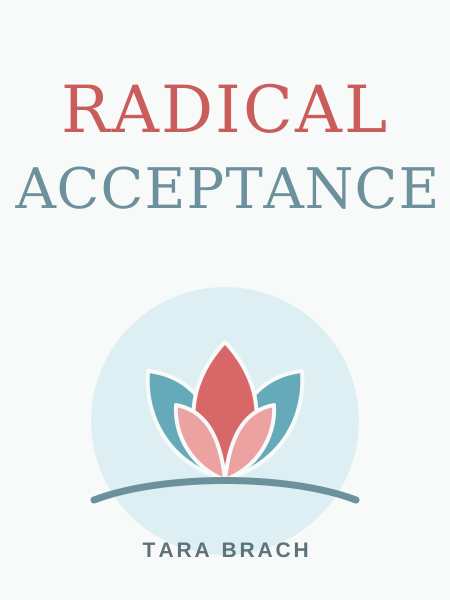
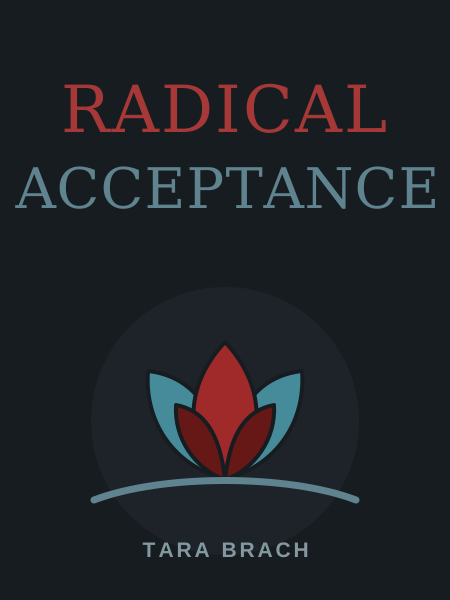
Radical Acceptance
Tara Brach · 2003
Editorial rating
- Evidence
- 6/10
- Actionability
- 7/10
- Originality
- 7/10
The thesis
Most suffering stems from believing something is fundamentally wrong with us - the "trance of unworthiness." Radical Acceptance combines mindfulness (seeing clearly what is) with compassion (meeting it with kindness) to end the war with ourselves and access the innate goodness beneath our conditioning.
Who this is for
Perfectionists trapped in self-criticism loops, anyone struggling with shame or feeling "not enough," and people exhausted from trying to fix themselves. Especially helpful for those healing from trauma, addiction, or chronic self-judgment.
My favorite quote
Pain is not wrong. Reacting to pain as wrong initiates the trance of unworthiness. The moment we believe something is wrong, our world shrinks and we lose ourselves in the effort to combat the pain.
Why it matters
Reframes pain as neutral signal, not personal failure. The suffering comes from resistance, not the pain itself.
Do this
Next time you feel physical or emotional pain, pause. Notice it without judgment - "This is pain" not "I'm broken." Breathe with it for 60 seconds.
Start here
The Sacred Pause. When you're caught in reactivity - anger, fear, self-criticism - stop. Don't act. Don't fix. Just pause. Bring mindful awareness to what's happening: sensations in body, emotions present, thoughts arising. Meet it all with kindness, not judgment. This pause interrupts automatic patterns and creates space for genuine choice instead of conditioned reaction.
Critical summary
Tara Brach, clinical psychologist and Buddhist meditation teacher with 40+ years practice, bridges Western psychology and Eastern contemplative traditions. The book emerged from her own struggles with anxiety and an eating disorder, plus 20 years working with therapy clients. She founded Insight Meditation Community of Washington and is known for blending psychological insight with Buddhist wisdom.
Core diagnosis: The Trance of Unworthiness
Western culture teaches we're fundamentally flawed, need fixing, must earn worthiness through achievement. This creates epidemic of "not belonging" - Mother Teresa's insight: "The biggest disease today is not leprosy or tuberculosis but rather the feeling of not belonging." Buddhism counters: we have Buddha nature - naturally loving, wise, compassionate. The trance is learned, not truth.
Radical Acceptance = Two Wings
- Mindfulness: Clear, non-judgmental awareness of present-moment experience. See what is without story overlay
- Compassion: Meeting experience with kindness, not criticism. Tenderness toward pain
Without both wings, practice fails. Mindfulness alone can become cold, detached observation that judges itself. Compassion alone can become self-pity or enabling. Together, they create healing presence.
Key practices
- Sacred Pause: Stop mid-reaction. Creates gap between stimulus and response. "Space between thought and action"
- Feeling without fixing: Allow emotions to be present without trying to change them. "What would it be like to accept this moment exactly as it is?"
- Embracing fear/desire: Neither pushing away pain nor grasping for pleasure. Both trap us in reactivity
- Recognizing "yes": When caught in "no" (resistance), ask "what am I saying yes to?" (underneath "I hate traffic" is "yes to arriving calmly")
What it gets right
- Trance metaphor is powerful: "Waking dream" captures how we're scripted by conditioning, unaware choices exist. Resonates deeply
- Pain ≠ suffering equation: Pain is inevitable (Buddha's first truth). Suffering is resisting pain. This distinction liberates
- Two wings framework: Mindfulness + compassion addresses common meditation pitfall - getting detached or judgmental
- Integration of psychology + Buddhism: Brach's clinical background prevents spiritual bypassing. She addresses trauma, not just "bad attitude"
- Mother Teresa insight: "Feeling of not belonging" as core suffering names Western epidemic accurately
What it misses or overstates
- Heavy on anecdotes, light on structure: Each chapter features "my patient Daniel" stories. Some find this relatable, others find it inauthentic, "Dale Carnegie Buddhism class"
- Assumes baseline safety: Radical acceptance requires nervous system capacity to tolerate discomfort. Trauma survivors may need more scaffolding before "just accepting"
- Buddhism-lite: Accessible to Western audience but strips some rigor. Treats Buddhism as therapeutic tool more than comprehensive philosophy
- Repetitive: Same insights stated multiple ways across chapters. Core message is 100 pages, book is 260
- Light on societal context: Frames unworthiness as individual problem to solve through practice. Underplays role of systemic oppression, marginalization creating real "not belonging"
- "Essential goodness" is assertion, not evidence: Buddhist metaphysics claim, not psychological finding. Helpful belief but not proven
Evidence quality: Weak to moderate. Brach is experienced clinician but this isn't research - it's synthesis of Buddhist teachings + clinical observations. No controlled studies. Evidence is: 40 years meditation practice, 20 years therapy work, Buddhist texts. Mindfulness research (Kabat-Zinn, etc.) supports some claims but isn't cited comprehensively. This is wisdom tradition, not science.
Critical reception: Goodreads ~4.1/5. Praised as "life-changing," "compassionate guide to self-acceptance." Criticized as "too many client stories," "repetitive," "better as lectures than book." Compatible across faiths - Christian readers report no conflict. Thich Nhat Hanh endorsed it. Secular readers appreciate psychological frame; spiritual seekers appreciate Buddhist depth.
This works best as gentle, compassionate introduction to self-acceptance. Works least as meditation manual - better for mindset shift than technique development.
Key concepts
Trance of Unworthiness
Waking dream where we believe we're fundamentally flawed, need fixing to belong. Conditioning from culture, family, trauma. Today: notice one "I'm not enough" thought - recognize it as trance, not truth.
Sacred Pause
Suspension of activity mid-reaction. Creates space between stimulus and response. Tomorrow: when you feel triggered, pause 10 seconds before reacting - just breathe and notice.
Two Wings of Acceptance
Mindfulness (clear seeing) + Compassion (kind presence). One-winged practice fails. This week: when practicing mindfulness, explicitly add "may I be kind to myself" to balance.
Feeling the Fear/Desire
Neither pushing away (aversion) nor grasping for (attachment). Both are trance. Instead, feel fully without fixing. Today: sit with one uncomfortable emotion for 2 minutes without trying to change it.
Innate Goodness
Buddha nature - natural wisdom, compassion beneath conditioning. Not earned, uncovered. This month: daily practice: "I am inherently worthy" (even if you don't believe it yet).
Core insights
-
"Believing something is wrong with us is the deepest, most tenacious suffering"
This belief - not circumstances - is the source. We can be healthy, successful, loved and still feel unworthy. The belief is the wound.
-
"The emotion of fear often works overtime"
Fear's job is survival. But when threat is gone and body stays tight, fear isn't protecting - it's imprisoning. We defend life instead of living it.
-
"Radical Acceptance doesn't mean self-indulgence or passivity"
Common misunderstanding. Accepting reality as it is ≠ approving of it or giving up. You can accept you're in pain AND work to change conditions. Acceptance precedes effective change.
-
"The more inadequate we feel, the more uncomfortable it is to admit faults"
So we blame others. But blaming temporarily relieves inadequacy while reinforcing it long-term. Deepens the grooves of unworthiness.
-
"We can't hold on to anything - a beautiful sunset, a sweet taste, an intimate moment"
All comes and goes. Lacking permanent satisfaction, we're continually driven to become something more. The chasing is the suffering.
Implementation steps
Today
- When you notice self-criticism, pause. Place hand on heart, say "this is hard" (self-compassion)
- Practice Sacred Pause once: mid-reaction, stop, breathe, notice sensations/emotions/thoughts
- Ask: "What would it be like to accept this moment exactly as it is?"
This week
- Daily 5-minute sitting: notice sensations without judging them good/bad
- Practice feeling emotions fully - anger, sadness, joy - without pushing away or amping up
- Identify one "I'm not enough" pattern - name it when it arises: "Trance of unworthiness"
This month
- Establish daily meditation (start 10 minutes) - mindfulness + compassion focus
- Work with one persistent fear or shame - practice accepting it's present without believing its story
- Notice when you're "at war with yourself" - judgment, resistance, fixing. Pause, soften
Ongoing
- Default to Sacred Pause in difficult moments - creates choice instead of reactivity
- Balance Mindfulness (seeing clearly) with Compassion (meeting kindly) in all practice
- Recognize essential goodness - not achievement, inherent. Return to this when trance activates
Suggested 30-day practice plan
An editorial application plan created by Monolithic Vault - an interpretation of the book's ideas, not part of the original book.
- Day 1
Notice how often "something is wrong" thought arises - just notice, don't fix
- Day 3
Practice Sacred Pause 3x - pause mid-activity, breathe, check in
- Day 7
Identify your most persistent unworthiness belief - write it down, recognize as trance
- Day 10
Sit with uncomfortable emotion for 5 minutes - neither push away nor amplify
- Day 14
Practice self-compassion phrase: "May I be kind to myself" when self-criticism arises
- Day 21
Reflect: Where am I still at war with myself? What would acceptance look like?
- Day 30
Daily practice established - 10 minutes mindfulness + compassion. Notice shifts in self-relationship
Free PDF summary
Take this analysis with you: a designed two-page field-notes sheet with the thesis, my favorite quote, the key concepts and core insights, and the full 30-day checklist. Print it or keep it - free, no signup.
Go deeper
If this analysis earned your attention, the full book goes further than any summary can. The original is always the primary source.