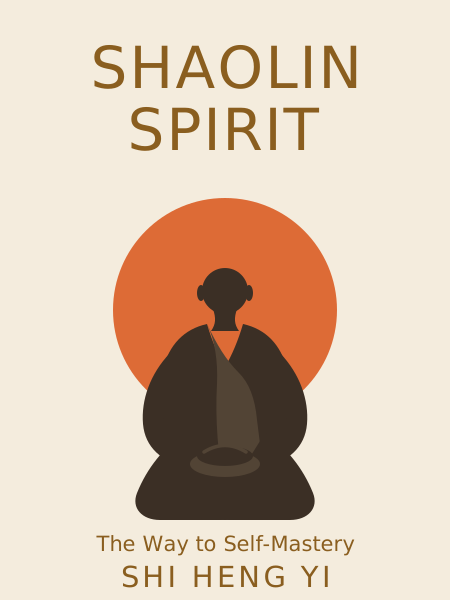
Shaolin Spirit
Shi Heng Yi · 2024
Editorial rating
- Evidence
- 5/10
- Actionability
- 8/10
- Originality
- 6/10
The thesis
Self-mastery is systematic engineering, not inspirational epiphany. A Shaolin master distills monastery wisdom into practical frameworks across five pillars - Body, Mind, Heart, Energy, and Spirit - arguing that disciplined daily practice, not occasional motivation bursts, creates lasting transformation.
Who this is for
Knowledge workers managing high cognitive loads seeking structured approaches to resilience and performance. Professionals skeptical of "woo" but open to structured practice. Anyone who's read the productivity books, tried the tips, and still feels scattered - this offers structural thinking to organize tactics you already know.
My favorite quote
Westerners treat meditation like medicine: 'I'll do 10 minutes when stressed.' Monks treat it like brushing teeth: non-negotiable maintenance.
Why it matters
Reframes mental clarity practices from crisis intervention to preventive maintenance. Don't wait until overwhelmed - build it into daily routine.
Do this
Set a recurring 10-minute "Mental Chamber Cleaning" block at end of workday. Write down 3 unresolved mental loops; for each: assign action, delegate, or defer with date.
Start here
Use the Five Pillars Framework as a diagnostic tool: Body (physical discipline), Mind (mental clarity), Heart (emotional balance), Energy (vitality management), Spirit (purpose/meaning). When performance drops, systematically check which pillar is degraded. Often physical neglect cascades into mental fog, or emotional instability from client stress undermines focus. The framework prevents flailing at symptoms by identifying root causes.
Critical summary
Shi Heng Yi, headmaster of Shaolin Temple Europe, delivers an operating system for human optimization disguised as Eastern wisdom. The book's strength lies not in novelty - most concepts trace back to classical Buddhist and Taoist teachings - but in systematic decomposition of monastic training into actionable frameworks for Western audiences.
The Body pillar prescribes deliberate discomfort training (cold exposure, fasting) as calibration tools for willpower - every cold shower is practice for overriding comfort-seeking impulses. The Mind pillar distinguishes "thought torrents" (uncontrolled cascades) from "thought streams" (directed contemplation). Heart training develops "emotional ground stability" - like a tree in a storm, flexible branches with stable roots. The Energy pillar advocates rhythm-based living and "empty time" - deliberate non-productivity periods. Spirit tackles purpose through the Three Questions Practice: What do I want? Why do I want it? What stops me?
What it gets right
- Systematic structure over motivational fluff - treats self-mastery as engineering problem
- Operationalizes ancient wisdom with specific implementations (cold exposure timing, meditation schedules, energy mapping)
- Shows interconnected systems thinking - neglecting one pillar cascades into failures in others
What it misses
- Implementation difficulty understated: Monasteries provide enforced accountability, peer modeling, environmental design. Yi doesn't adequately address how isolated practitioners compensate.
- Limited engagement with modern research validating (or challenging) these practices
- Some concepts feel lifted from modern self-help with Eastern branding: "mental chamber cleaning" is cognitive decluttering, "empty time" is deliberate rest
Evidence is predominantly observational from monastery life - anecdotally strong (thousands of monks across centuries), scientifically weak (no controlled studies, selection bias).
Key concepts
Five Pillars Framework
Body, Mind, Heart, Energy, Spirit - interconnected domains. Use as diagnostic: when performance drops, check which pillar degraded.
Thought Torrents vs. Streams
Uncontrolled mental cascades versus directed contemplation. Label unproductive spirals "torrent," pause, redirect.
Mental Chamber Cleaning
Active removal of cognitive clutter. End-of-day ritual: 3 unresolved loops -> action, delegate, or defer with date.
Emotional Ground Stability
Core equilibrium while surface emotions fluctuate. Tree in storm: flexibility above, stability below.
Discomfort Training
Deliberate exposure to controllable challenges to build decision-making resilience. Cold showers, difficult conversations, tasks you've avoided.
Empty Time
Scheduled periods of zero productivity. Not rest - unstructured thinking time for creative problem-solving.
Core insights
-
Discomfort is calibration technology, not punishment
Regular exposure to chosen difficulty trains the gap between impulse and action - the core mechanism of self-control. The specific discomfort matters less than repeatedly proving you can override comfort-seeking.
-
Mental clarity requires active maintenance
Your mind accumulates cognitive clutter (unresolved decisions, open loops) that degrades processing capacity. Daily "chamber cleaning" prevents accumulation that leads to foggy thinking.
-
Energy management beats time management
You don't have uniform cognitive capacity across the day. Align high-stakes work with proven peak periods. Schedule recovery deliberately, not accidentally.
-
Context-switching requires transition rituals
Monasteries use bells to mark activity changes. Knowledge workers need equivalent signals - physical movement, environment change, deliberate pause.
-
The knowing-doing gap is architecture failure
You likely already know what you should do. The problem is system design. Build environments and routines that make the right action the path of least resistance.
Implementation steps
Today
- Start Cold Decision Protocol: End tomorrow's shower with 30 seconds cold water. No negotiation - just execute. The point isn't the cold; it's practicing decision before comfort-seeking brain negotiates.
- Set up Mental Chamber Cleaning calendar block at end of workday (10 minutes)
This week
- Energy Landscape Mapping: For 7 days, rate energy 1-10 every 2 hours. Identify your peak 2-hour cognitive window.
- Design context-switching rituals for your 3 most common transitions (deep work -> meetings, admin -> client work, technical -> strategic)
This month
- Install weekly Empty Time: 2-hour "Buffer Zone" with no meetings, no deliverables, no agenda - unstructured processing time
- Conduct Three Questions Audit on most stuck project: What do I want? Why? What stops me?
Ongoing
- Five Pillars Weekly Audit (Sunday, 15 min): Rate each pillar 1-10, identify weakest, plan 2-3 actions to address
- Monthly Purpose Construction Audit: Compare actual time spent vs. stated priorities - where's the gap between stated values and revealed preferences?
Suggested 30-day practice plan
An editorial application plan created by Monolithic Vault - an interpretation of the book's ideas, not part of the original book.
- Day 1
Install Cold Decision Protocol; set up Mental Chamber Cleaning block
- Day 2
Begin Energy Landscape Mapping (rate energy every 2 hours)
- Day 3
Complete first Mental Chamber Cleaning session; note 3 unresolved loops
- Day 7
Analyze energy data; identify peak cognitive window; reschedule complex work accordingly
- Day 14
Design context-switching rituals; schedule first Empty Time block
- Day 21
Conduct Three Questions Audit on stuck project; complete first Discomfort Training challenge (physical, social, or professional)
- Day 30
Complete first Five Pillars Audit; compare before/after energy, focus, decision-making quality
Free PDF summary
Take this analysis with you: a designed two-page field-notes sheet with the thesis, my favorite quote, the key concepts and core insights, and the full 30-day checklist. Print it or keep it - free, no signup.
Go deeper
If this analysis earned your attention, the full book goes further than any summary can. The original is always the primary source.