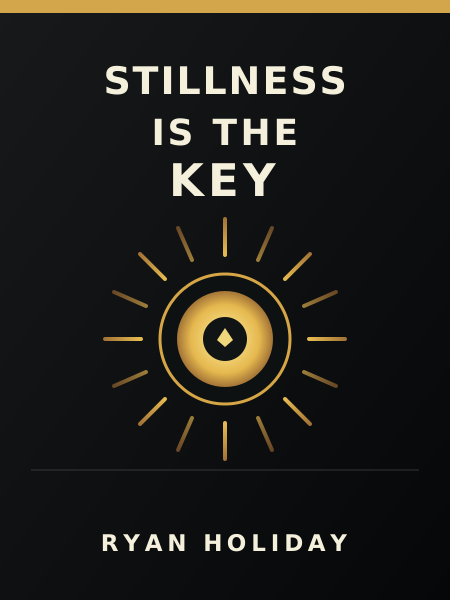
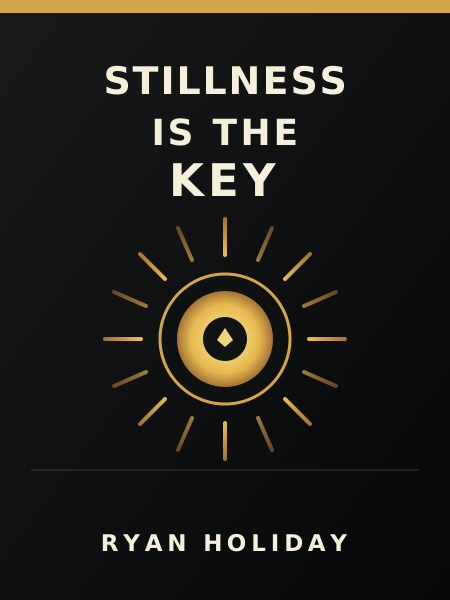
Stillness Is the Key
Ryan Holiday · 2019
Editorial rating
- Evidence
- 6/10
- Actionability
- 7/10
- Originality
- 5/10
The thesis
Stillness - a quiet, focused, present state - is the key to peak performance, clear thinking, and meaningful living. Achieve it through three domains: calm the mind, strengthen the body, mature the soul. In a frenzied world, stillness becomes competitive advantage.
Who this is for
Burned-out executives drowning in notifications, creative professionals seeking focus, and anyone feeling overwhelmed by modern life's relentless pace who wants practical techniques for inner calm.
My favorite quote
All of humanity's problems stem from man's inability to sit quietly in a room alone." (Blaise Pascal)
Why it matters
Diagnoses the root disease - we've lost the ability to be still with ourselves, so we chase endless external stimulation.
Do this
Sit alone for 10 minutes today. No phone, no book, no music. Just you.
Start here
Stillness isn't inactivity - it's focused presence. Tiger Woods in the final putt. Churchill making wartime decisions. Fred Rogers sitting in silence. Stillness aims the arrow, inspires ideas, and cuts through noise. To achieve it: tame your mind's chatter, respect your body's limits, and cultivate your soul's depth. Start with 10 minutes of solitude daily.
Critical summary
Holiday's third book in his Stoicism trilogy explores "stillness" (Greek: hesychia, Stoic: apatheia) as the foundation for wisdom, performance, and peace. He organizes the pursuit across mind, body, and soul - drawing from Marcus Aurelius, Buddhism, Epicureanism, and modern psychology.
What it gets right
- Synthesizes multiple wisdom traditions (Stoicism, Buddhism, Christianity) into practical advice
- The three-domain structure (Mind, Body, Soul) is comprehensive
- More mature than his earlier work - less preachy, more nuanced
- Addresses real modern problems: distraction, burnout, information overload
- Examples span cultures and eras (Kennedy, Shawn Green, Marina Abramović)
What it misses or overstates
- Advice assumes privilege (Bill Gates' "Think Week" requires wealth, free time, supportive systems)
- "Just be still" can feel dismissive for those with ADHD, anxiety disorders, or poverty-driven stress
- Heavy on ancient wisdom, light on modern neuroscience (could cite more research)
- Some techniques require resources most people lack (solo retreats, dedicated space)
- Doesn't acknowledge structural barriers to stillness (gig economy, childcare, 24/7 connectivity)
CRITICAL PROBLEMS
The book romanticizes solitude without addressing that many people lack the luxury of choosing it. A single parent working two jobs can't "disconnect for a think week." Critics note Holiday's advice often targets those already successful - executives, creatives with flexible schedules. For precarious workers, stillness isn't a choice; survival demands constant motion. The book also conflates different concepts under "stillness" (meditation, focus, presence, leisure) without distinguishing them.
Evidence quality: Anecdotal and philosophical. Historical examples and wisdom traditions provide millennia of observational data, but Holiday doesn't cite clinical studies on stillness practices. Research on meditation, mindfulness, and solitude exists - he could strengthen claims with it.
Key concepts
Stillness of Mind
Clear thinking free from anxiety's static. Journal nightly to dump mental clutter.
Stillness of Body
Physical calm through sleep, walking, limiting input. Take one 20-minute silent walk this week.
Stillness of Soul
Deep purpose and virtue beyond material success. Ask "What do I stand for?" and mean it.
Limit Your Inputs
Information overload drowns signal in noise. Cut one news source; add one classic book.
Seek Solitude
Thinking requires alone time. Schedule recurring "solo hours" on calendar.
Be Present
The past is fixed, future uncertain; only now is real. Notice five physical sensations right now.
Core insights
-
Busyness is laziness
Constant motion avoids hard thinking. Stillness forces you to confront what matters.
-
You can't think clearly in a crowded room
Solitude isn't lonely; it's where clarity lives. Even introverts need time fully alone.
-
The body affects the mind
Exhaustion, poor diet, and sedentary life cloud thinking. Treat your body as the mind's foundation.
-
Technology is designed to destroy stillness
Apps hijack attention by design. Your phone is an adversary, not a tool.
-
Virtue requires contemplation
Doing good isn't instinct; it's practice. Stillness creates space to choose wisely.
Implementation steps
Today
- Sit in silence for 10 minutes (no phone, no distraction)
- Turn off three non-essential notifications
- Write down one value you stand for
This week
- Take three 20-minute silent walks (no music, no podcasts)
- Read one book slowly (not productivity-related)
- Delete one app that steals your attention
- Journal nightly for 5 minutes
This month
- Schedule recurring "deep work" blocks (2-hour minimum)
- Try one full day without screens (Sabbath principle)
- Develop one contemplative practice (meditation, prayer, journaling)
- Sleep 7+ hours nightly for 21 consecutive days
Ongoing
- Protect morning stillness: no phone for first hour awake
- Walk regularly without headphones
- Say no to most requests (protect time for thought)
- Review annually: "Am I calmer than last year?"
Suggested 30-day practice plan
An editorial application plan created by Monolithic Vault - an interpretation of the book's ideas, not part of the original book.
- Day 1
Sit in silence for 10 minutes
- Day 2
Turn off all non-essential notifications
- Day 3
Take a 20-minute silent walk
- Day 7
Week 1 review - what's hardest about stillness?
- Day 10
Start daily journaling habit (5 minutes minimum)
- Day 14
Mid-month: try one tech-free day
- Day 17
Read one chapter of Meditations or Letters from a Stoic
- Day 21
Week 3 checkpoint - how has your thinking changed?
- Day 25
Schedule recurring "think time" on calendar
- Day 30
Final reflection - write how stillness improved your life
Free PDF summary
Take this analysis with you: a designed two-page field-notes sheet with the thesis, my favorite quote, the key concepts and core insights, and the full 30-day checklist. Print it or keep it - free, no signup.
Go deeper
If this analysis earned your attention, the full book goes further than any summary can. The original is always the primary source.