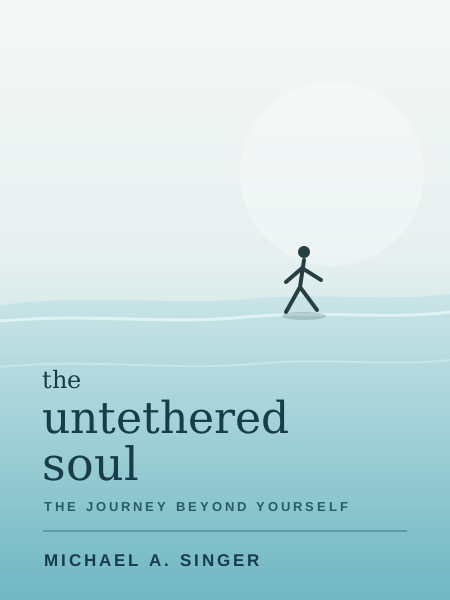
The Untethered Soul
Michael A. Singer · 2007
Editorial rating
- Evidence
- 5/10
- Actionability
- 7/10
- Originality
- 6/10
The thesis
You are not your thoughts. You are the consciousness that observes your thoughts. Once you realize you're the witness behind the mental chatter, not the chatter itself, you can step back from the drama and experience true inner freedom.
Who this is for
People exhausted by the constant voice in their head, those trapped by past traumas that won't release their grip, and anyone seeking a secular approach to mindfulness rooted in yogic philosophy.
My favorite quote
There is nothing more important to true growth than realizing that you are not the voice of the mind - you are the one who hears it.
Why it matters
This single insight creates the space between stimulus and response, between trigger and reaction. It's the doorway to all inner work.
Do this
Spend three minutes today just noticing your thoughts. Don't judge them, don't engage - just watch them arise and pass. You are the watcher.
Start here
You are not your mind. That voice narrating your life, criticizing, planning, worrying? That's not you. You're the silent observer witnessing that voice. This distinction changes everything. When you realize you can watch your thoughts like clouds passing, you stop being controlled by them. Practice this: Listen to your inner voice for 60 seconds as if it belongs to someone else. Notice how it sounds absurd when you're not fused with it.
Critical summary
Singer, an entrepreneur who founded a yoga/meditation center after a spiritual awakening during his economics doctorate, offers a road map to inner freedom through witness consciousness. The book draws heavily from yogic philosophy and Vedanta, presenting complex Eastern concepts in accessible (if sometimes repetitive) Western language.
Core framework: (1) Recognize you're not your thoughts, (2) Stop protecting your wounded ego, (3) Let go of everything - thoughts, emotions, past pain, (4) Open your heart completely to all experience, (5) Surrender to the flow of life.
What it gets right
- Powerful distinction between self (consciousness) and mind (thoughts)
- Emphasis on letting emotional pain pass through you rather than storing it
- Recognition that most suffering comes from resisting what already is
- Practical focus on opening the "heart center" and releasing blocked energy
- Buddhist/yogic wisdom presented without requiring religious belief
CRITICAL PROBLEMS
- Dangerously repetitive advice to "just let go": Singer's answer to almost everything is "release it, let it pass through." But for trauma survivors, complex PTSD, or people in abusive situations, this advice can be invalidating and even dangerous. Sometimes you need professional help, not just spiritual bypassing.
- Lack of practical HOW: The book tells you to let go, open your heart, don't protect yourself - but rarely explains concrete methods for doing this when you're in the grip of panic or trauma.
- Confusing metaphysics about the "seat of consciousness": Singer presupposes the existence of a soul/self separate from the body and brain. For materialists or skeptics, this undermines credibility. The neuroscience of consciousness is far more complex than presented.
- Gender issues in later chapters: The section on relationships includes dated notions about love, and God is repeatedly referred to as "He." Several Goodreads reviewers found this alienating.
- "God only likes happy people" theology: Near the end, Singer suggests God wants you to be happy and fulfilled, which feels like prosperity gospel lite. This framing bothers readers dealing with depression or grief.
- Extremely long body scan meditations: The book recommends 45-minute lying meditations. Most beginners can't do this without falling asleep or becoming frustrated.
Evidence quality: Primarily experiential wisdom from yogic traditions, presented as self-evident truth. No citations, no peer-reviewed research. However, the core insight about meta-cognition (observing your thoughts) is validated by decades of CBT and mindfulness research. The practices work - the explanatory framework is debatable.
Critics on Goodreads note the book is "painfully repetitive," "like reading 'live laugh love' over and over," and that it could've been condensed to a pamphlet. Fair point - Singer circles the same concepts for 200 pages.
Key concepts
The Inner Roommate
That voice constantly narrating, judging, planning. Imagine if someone followed you around talking that much - you'd call them insane. Yet we tolerate it internally.
Witness Consciousness
The "you" observing your thoughts, emotions, and sensations. This observer is always calm, always present, always free. Access it by stepping back.
Closing Your Heart
Every time you reject an experience (person, emotion, event), you close your heart a bit more. Over time, this creates a tiny, defended life. Liberation requires full openness.
Samskaras
Stored emotional wounds from past pain. They sit in your consciousness like thorns, waiting to be triggered. Healing means letting them arise and releasing them, not burying them deeper.
The Tao of Energy Flow
Life is energy constantly moving through you. Resistance creates blockages. Surrender creates flow. Health is energetic openness.
Death Awareness
Contemplating death clarifies what matters and frees you from petty concerns. "You could die today" is liberation, not morbidity.
Core insights
-
The voice in your head is not wise - it's neurotic
It narrates everything, argues with itself, replays the past, rehearses the future. It's exhausting and mostly useless.
-
You can't solve internal problems by rearranging external circumstances
Changing jobs, relationships, or cities won't fix inner restlessness. The problem is how you relate to experience, not the experience itself.
-
Most of what we call "self-protection" is really self-imprisonment
We build walls to avoid pain, but those walls trap us. True safety comes from being undefended.
-
Emotional pain isn't dangerous unless you resist it
Let it pass through like a storm. The wave will crest and recede. Fighting it makes it permanent.
-
Your preferences are limitations
"I like this, I don't like that" narrows your experience to a tiny comfort zone. What if you loved everything?
-
The mind is a terrible master but a useful servant
Don't let thoughts run your life. Use them as tools when needed, then put them down.
-
True spiritual growth is uncomfortable
If you're only meditating to feel peaceful, you're using spirituality as another form of control. Real freedom comes from opening to ALL of life.
Implementation steps
Today
- Set a timer for 3 minutes. Sit and watch your thoughts arise without engaging them. You're the observer, not the thinker.
- Notice one moment today where you close your heart (judgment, irritation, rejection). What are you protecting?
This week
- When strong emotion arises, don't resist it. Say: "There's fear/anger/sadness. I am not this feeling. I am the one observing it."
- Practice "staying open" to one thing you normally avoid (traffic, annoying coworker, discomfort).
This month
- Daily 10-minute meditation: Just observe the breath and thoughts. When you drift, return to witnessing.
- Identify three "thorns" (old wounds) you're protecting. Journal: What would letting them go look like?
Ongoing
- Morning practice: Before getting out of bed, spend 60 seconds as pure awareness - no thoughts, just being.
- When triggered: Pause, breathe, witness the emotion without becoming it. Let it pass.
Suggested 30-day practice plan
An editorial application plan created by Monolithic Vault - an interpretation of the book's ideas, not part of the original book.
- Day 1
Read chapters 1-3. Practice watching your inner dialogue for 5 minutes.
- Day 3
Notice how often you resist what's happening. Count the resistances today.
- Day 7
First big check-in: Can you recognize the difference between "you" and your thoughts yet?
- Day 10
Practice "heart opening" - when you want to close off, pause and breathe into the discomfort instead.
- Day 14
Midpoint reflection: What emotions are you still avoiding? Why?
- Day 21
Experiment with "complete openness" for 24 hours - say yes to all experience without resistance.
- Day 30
Write down: What changed? What still feels impossible? Commit to ongoing practice of witnessing.
Free PDF summary
Take this analysis with you: a designed two-page field-notes sheet with the thesis, my favorite quote, the key concepts and core insights, and the full 30-day checklist. Print it or keep it - free, no signup.
Go deeper
If this analysis earned your attention, the full book goes further than any summary can. The original is always the primary source.