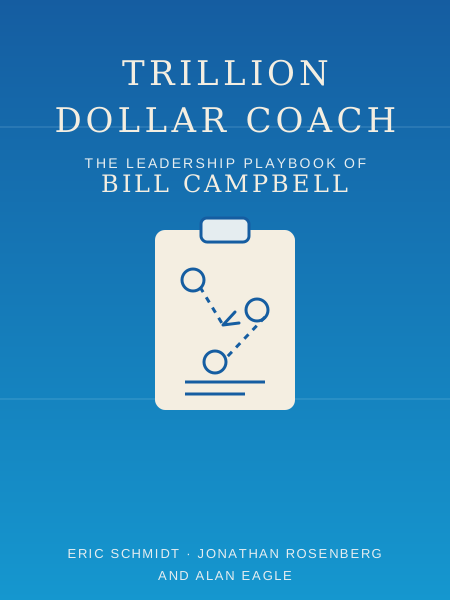
Trillion Dollar Coach
Eric Schmidt, Jonathan Rosenberg & Alan Eagle · 2019
Editorial rating
- Evidence
- 5/10
- Actionability
- 6/10
- Originality
- 5/10
The thesis
The best leaders have coaches. Bill Campbell - a former football coach who mentored Steve Jobs, Larry Page, Eric Schmidt, and dozens of other tech luminaries - built over a trillion dollars in market value by focusing on trust, teams, and human connection rather than strategy or tactics.
Who this is for
Leaders seeking to develop their coaching abilities, executives wanting to understand what made Silicon Valley's legendary coach effective, and managers who want to build trust-based relationships with their teams.
My favorite quote
Your title makes you a manager. Your people make you a leader.
Why it matters
Authority comes from position. Leadership comes from the people who choose to follow you.
Do this
Ask yourself: "If I had no title, would people still follow my lead? Why or why not?"
Start here
Work the Team, Not the Problem: When facing a challenge, most leaders focus on the issue. Bill focused on whether the right team was addressing it. Get the people and dynamics right, and they'll solve the problem better than you could.
Critical summary
Written by Google executives who were personally coached by Bill Campbell, this book is a tribute to the man who mentored some of the most successful entrepreneurs in history. It's based on 80+ interviews with people who knew and worked with Campbell.
What it gets right
- Emphasis on trust, relationships, and psychological safety
- Practical coaching behaviors (1:1 structure, team meetings, feedback)
- The importance of coaching the team, not just individuals
- Bill's unique blend of directness and genuine care
- Stories from Jobs, Bezos, Page, and other luminaries
What it misses
- Reads more like a tribute than a practical playbook
- Many insights are high-level ("love your people") without implementation details
- Bill's style may not be replicable - personality-dependent
- Limited discussion of when coaching fails or when Bill was wrong
- The "trillion dollar" attribution is impossible to verify
Evidence is primarily anecdotal - interviews with people who worked with Campbell. No controlled studies or systematic analysis.
Key concepts
Work the Team First
Before solving a problem, ensure the right team is addressing it with the right dynamics.
Only Coach the Coachable
Coaching requires openness and humility. Don't waste time on those who aren't ready to learn.
Operational Excellence
Great leaders focus on details. Know your operations cold before venturing into strategy.
Love the People
Care genuinely about individuals - their families, their struggles, their growth. This isn't soft; it's the foundation of trust.
The Elephant in the Room
Bill addressed tensions directly. Bringing up what everyone's avoiding clears the air for progress.
Core insights
-
Trust is the foundation
Without trust, no amount of strategy or skill matters. Build it first.
-
1:1s and staff meetings are sacred
Bill considered these the two most important tools. Master them.
-
Bring up the elephant
Surface the uncomfortable truths everyone's avoiding. Teams can't move forward while tiptoeing around problems.
-
Start meetings with trip reports
Before diving into business, share personal updates. It builds connection and signals that people matter.
-
Fill the gaps between people
Bill's role was often connecting people who should be talking but weren't.
-
Believe in people more than they believe in themselves
Raise the bar higher than they'd set for themselves.
Implementation steps
Today
- In your next 1:1, start with "What's going on in your life?" before business
- Identify one "elephant in the room" on your team that needs addressing
This week
- Audit your 1:1 structure. Are you covering: top priorities, relationships with peers, and personal development?
- Connect two people on your team who should be collaborating but aren't
This month
- Identify who on your team is "coachable" vs. who isn't ready. Adjust your investment accordingly.
- Address one team tension directly - name the elephant
Ongoing
- Before solving problems, ask: "Is this the right team to address this?"
- Start team meetings with personal check-ins (trip reports)
Suggested 30-day practice plan
An editorial application plan created by Monolithic Vault - an interpretation of the book's ideas, not part of the original book.
- Day 1
List your direct reports. Rate each on coachability (1-10)
- Day 2
In your next 1:1, ask a personal question before business
- Day 3
Identify one team tension that's gone unspoken
- Day 7
Address the elephant with the relevant parties
- Day 14
Review your staff meeting structure - does it encourage open debate?
- Day 21
Connect two people who should be collaborating
- Day 30
Reflect: What changed in team dynamics? What's still stuck?
Free PDF summary
Take this analysis with you: a designed two-page field-notes sheet with the thesis, my favorite quote, the key concepts and core insights, and the full 30-day checklist. Print it or keep it - free, no signup.
Go deeper
If this analysis earned your attention, the full book goes further than any summary can. The original is always the primary source.