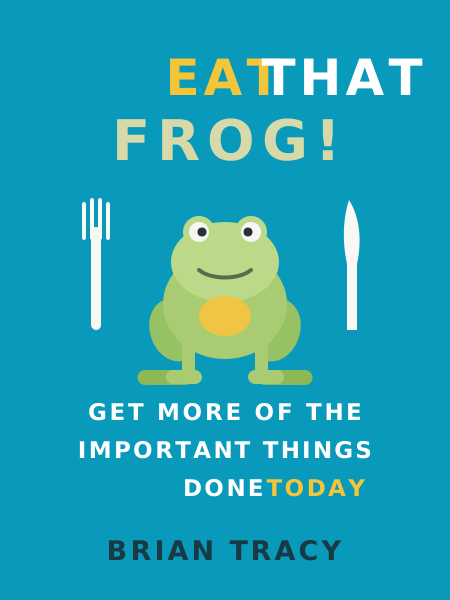
Eat That Frog!
Brian Tracy · 2001
Editorial rating
- Evidence
- 4/10
- Actionability
- 8/10
- Originality
- 3/10
The thesis
Procrastination is the silent killer of success. The cure is simple: identify your most important, most dreaded task - your "frog" - and do it first thing every morning before anything else can derail you.
Who this is for
Chronic procrastinators, professionals overwhelmed by competing priorities, and anyone who ends each day wondering where the time went while their most important work remains undone.
My favorite quote
If you have to eat a live frog, it's best to do it first thing in the morning. And if you have to eat two frogs, eat the ugliest one first.
Why it matters
This Mark Twain-attributed principle captures the entire book: tackle the worst thing first, and the rest of your day improves by comparison.
Do this
Tomorrow morning, before checking email, identify and complete your single most important task.
Start here
Your "frog" is the one task on your list that has the biggest positive impact on your life or work - and the one you're most likely to procrastinate on. Do it first, before anything else, when your willpower is highest. The rest of the day becomes easier.
Critical summary
Brian Tracy, the prolific personal development author, compiles 21 techniques for beating procrastination into a short, accessible book. The core advice is straightforward: prioritize ruthlessly, focus on high-impact tasks, and tackle the hardest ones first.
The book is relentlessly practical. Each chapter ends with an action step, making it easy to implement immediately. The writing is clear and direct - no academic jargon, no lengthy digressions.
What it gets right
- The "eat the frog first" metaphor is memorable and effective
- Short chapters make it highly accessible
- Emphasis on written planning and the 80/20 rule is sound
- Action steps at each chapter's end encourage implementation
What it misses
- No citations, no research - pure assertion based on Tracy's experience
- Some readers find it reads like an extended infomercial
- Many techniques are basic productivity advice repackaged (prioritize, plan, focus)
- Doesn't address root causes of procrastination (fear, perfectionism, unclear goals)
- The ABCDE method and similar frameworks assume linear, predictable work that doesn't fit all roles
- Some claims feel dated ("learn to type faster" advice)
This is Productivity 101 with a catchy title. If you've read other productivity books, you've encountered most of these ideas. But for beginners, or those who need a refresher, it's an efficient package.
Key concepts
Eat That Frog
Do your most important, most dreaded task first thing in the morning. Don't negotiate with yourself.
ABCDE Method
Prioritize tasks as A (must do), B (should do), C (nice to do), D (delegate), E (eliminate).
80/20 Rule
20% of your tasks produce 80% of your results. Identify and focus on that 20%.
Single Handling
Once you start your frog, don't stop until it's complete. Context-switching kills productivity.
Slice and Dice
Break large tasks into small, actionable steps. Eat the frog one bite at a time.
Law of Three
Identify the three tasks that contribute most to your work. Focus disproportionately on these.
Core insights
-
Decision precedes action
Procrastination often stems from unclear priorities. Decide what matters before you act.
-
Willpower depletes
Your self-discipline is highest in the morning. Use it for your most important work, not email.
-
Completion creates momentum
Finishing a significant task releases dopamine and motivates further action.
-
Planning multiplies time
Every minute spent planning saves 10 minutes in execution.
-
Constraints force prioritization
If you only had 2 hours to work today, what would you do? Do that first.
Implementation steps
Today
- Write down everything you need to do tomorrow
- Circle the one task that would have the most positive impact if completed
This week
- Apply ABCDE prioritization to your entire task list
- Track: Did you eat your frog first each morning? What got in the way?
This month
- Identify your "Law of Three" - the three tasks that contribute most to your role
- Audit your calendar: How much time goes to A-tasks vs. C-tasks?
Ongoing
- Start each day by identifying and eating your frog before email
- Weekly review: Are you spending 80% of your time on the 20% that matters?
Suggested 30-day practice plan
An editorial application plan created by Monolithic Vault - an interpretation of the book's ideas, not part of the original book.
- Day 1
List all current tasks. Apply ABCDE method. Identify tomorrow's frog.
- Day 2
Eat your frog before opening email. Notice how the day feels different.
- Day 3
Apply "Slice and Dice" - break a large project into 15-minute tasks
- Day 7
Review the week. How many mornings did you eat the frog first? What blocked you?
- Day 14
Identify your "Law of Three" tasks. Are you protecting time for them?
- Day 21
Apply 80/20 analysis: Which 20% of activities drive 80% of your results?
- Day 30
Build the habit: Frog-first mornings should feel automatic. What's your next-level productivity challenge?
Free PDF summary
Take this analysis with you: a designed two-page field-notes sheet with the thesis, my favorite quote, the key concepts and core insights, and the full 30-day checklist. Print it or keep it - free, no signup.
Go deeper
If this analysis earned your attention, the full book goes further than any summary can. The original is always the primary source.