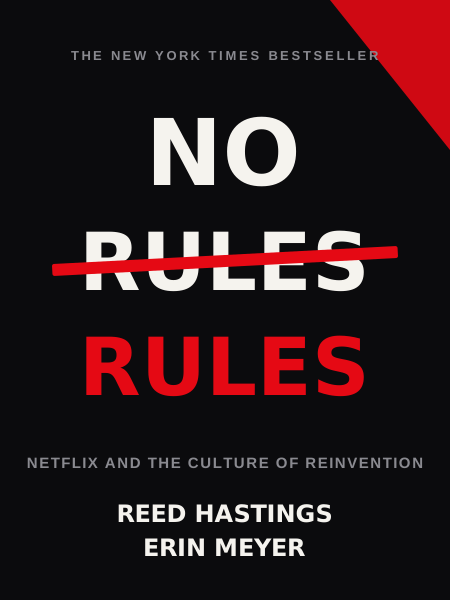
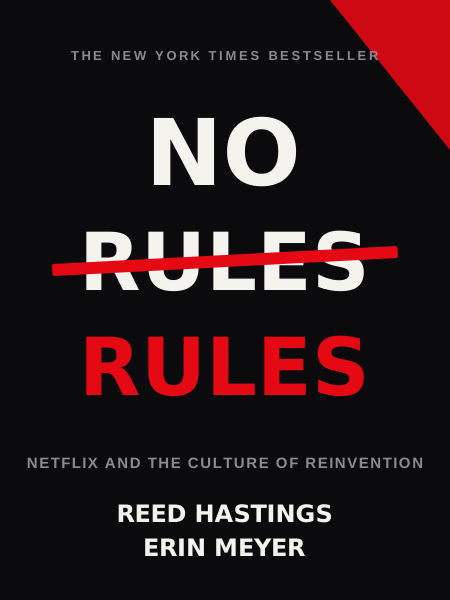
No Rules Rules
Reed Hastings & Erin Meyer · 2020
Editorial rating
- Evidence
- 6/10
- Actionability
- 7/10
- Originality
- 8/10
The thesis
In creative, innovation-driven companies, the goal isn't preventing mistakes - it's enabling speed and innovation. By increasing "talent density," fostering radical candor, and removing controls (approvals, policies, vacation limits), you create freedom with responsibility that outperforms bureaucracy.
Who this is for
Leaders at innovative companies where creativity matters more than consistency, executives frustrated by slow decision-making, and anyone curious about how Netflix built a culture of speed and accountability.
My favorite quote
Adequate performance gets a generous severance package.
Why it matters
This isn't cruelty - it's clarity. Netflix treats employment like a sports team, not a family. Performance is the price of admission.
Do this
Apply the "Keeper Test" to yourself: Would your boss fight hard to keep you if you wanted to leave?
Start here
Build Talent Density First: Netflix's "no rules" only work because they hire exceptional people and pay top of market. Without high talent density, removing controls creates chaos. The sequence matters: density first, then candor, then remove controls. Skip steps at your peril.
Critical summary
Hastings, Netflix co-founder and former CEO, partners with business professor Erin Meyer to explain the Netflix culture that enabled its transformation from DVD mailer to streaming giant. The book alternates between Hastings' principles and Meyer's analysis based on 200+ Netflix employee interviews.
What it gets right
- Clear framework: Talent Density → Candor → Remove Controls (in that order)
- Honest about the downsides and cultural tensions
- Practical examples of policies (no vacation tracking, no expense approval)
- International culture challenges addressed directly
- The "Keeper Test" as a clarifying tool
What it misses
- The culture can be brutal - described as "fear-inducing" by some former employees
- "No rules" is misleading - there are plenty of implicit rules
- Success may owe more to market timing and content strategy than culture
- Limited applicability to industries where consistency matters (healthcare, aviation)
- The emphasis on "top talent" can create elitism and anxiety
Evidence is primarily anecdotal - Hastings' experience plus employee interviews. No controlled studies on cultural effectiveness.
Key concepts
Talent Density
Hire only exceptional people and pay them top of market. One adequate performer lowers the standard for everyone.
Radical Candor
Give feedback constantly, directly, and constructively. What goes unsaid gets worse.
The Keeper Test
Ask "If X wanted to leave, would I fight hard to keep them?" If no, give them a generous severance now.
Freedom with Responsibility
Remove approvals and policies. Replace them with "Act in Netflix's best interest."
Context, Not Control
Instead of telling people what to do, give them the context to make good decisions themselves.
Core insights
-
Control is expensive
Every approval process, vacation policy, and expense limit costs more in drag than it saves in abuse.
-
Adequate is the enemy of excellent
One mediocre performer is a cancer. High performers don't want to work with B-players.
-
Sunshine is the best disinfectant
Make decisions, expenses, and feedback visible. Transparency prevents abuse without bureaucracy.
-
Lead with context, not control
Tell people the "why" and let them figure out the "how." Smart people make better decisions than policies.
-
Family is the wrong metaphor
Families don't fire members. Sports teams do. Clarity about this creates appropriate expectations.
-
Candor requires the 4 A's
Aim to Assist, make it Actionable, show Appreciation, and you can Accept or reject it.
Implementation steps
Today
- Give one piece of direct, constructive feedback you've been holding back
- Ask yourself: Am I a "keeper"? Would my boss fight hard to retain me?
This week
- For one decision you'd normally escalate, make it yourself and inform afterward
- Remove one unnecessary approval step from your workflow
This month
- Conduct a talent review: Who would you fight to keep? Who wouldn't you?
- Share one "lowlight" (failure or mistake) with your team openly
Ongoing
- When giving context for a decision, explain the "why" and let people determine the "how"
- Apply the 4 A's to all feedback: Aim to Assist, Actionable, Appreciate, Accept/reject
Suggested 30-day practice plan
An editorial application plan created by Monolithic Vault - an interpretation of the book's ideas, not part of the original book.
- Day 1
List your team. For each person, answer: "Would I fight to keep them?"
- Day 2
Identify one policy or approval that slows you down
- Day 3
Give feedback using the 4 A's framework
- Day 7
Make one decision you'd normally escalate - inform, don't ask
- Day 14
Review one person on your team who's "adequate." What's the honest next step?
- Day 21
Ask for candid feedback on yourself. Listen without defending.
- Day 30
Reflect: What changed? What's uncomfortable but necessary?
Free PDF summary
Take this analysis with you: a designed two-page field-notes sheet with the thesis, my favorite quote, the key concepts and core insights, and the full 30-day checklist. Print it or keep it - free, no signup.
Go deeper
If this analysis earned your attention, the full book goes further than any summary can. The original is always the primary source.