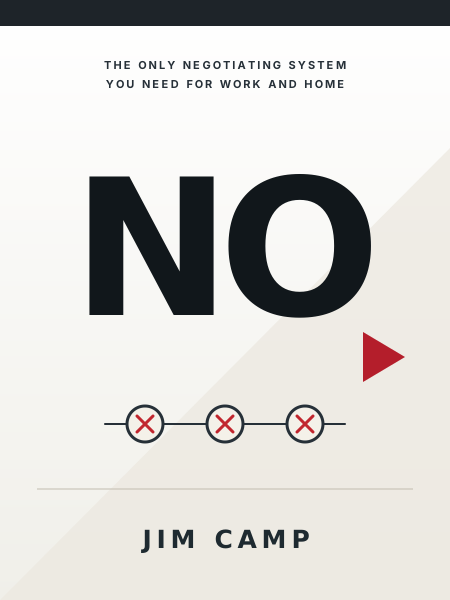
Start with No
Jim Camp · 2002
Editorial rating
- Evidence
- 5/10
- Actionability
- 8/10
- Originality
- 7/10
The thesis
The win-win approach to negotiation is a dangerous myth that leads to unnecessary compromise. Instead, give your counterpart explicit permission to say "no" - this removes pressure, eliminates neediness, and creates the psychological safety needed for genuine problem-solving.
Who this is for
Sales professionals tired of feeling manipulative, consultants negotiating scope with clients, and anyone who feels they compromise too quickly to avoid conflict.
My favorite quote
Wanting a result is different from feeling dependent on it. If the deal does not move in a productive direction, simply walk away.
Why it matters
Neediness is the ultimate negotiation killer. The moment you need the deal more than they do, you've lost.
Do this
Before your next negotiation, define your walk-away point clearly. Write it down. Mean it.
Start here
Eliminate Neediness: Your greatest weakness in any negotiation is appearing needy. Wanting an outcome is fine; needing it is fatal. Before any negotiation, genuinely prepare yourself to walk away. If you can't, you're not negotiating - you're begging.
Critical summary
Jim Camp positions himself as the anti-Harvard Negotiation Project, arguing that "Getting to Yes" creates weak negotiators who compromise prematurely. His alternative system emphasizes decision-making over emotions, control over rapport, and "no" over "yes."
The core framework centers on removing neediness. Camp argues that appearing desperate - through tone, body language, or premature concessions - signals to sophisticated opponents that they have leverage. Instead, he advocates for starting negotiations by explicitly giving the other side permission to say no, which paradoxically reduces their defensiveness.
What it gets right
- The anti-neediness principle is genuinely important and under-discussed
- "No" as a starting point rather than failure is a useful reframe
- Focus on behavior you can control (your actions) rather than outcomes you can't
- Emphasis on mission and purpose rather than tactical tricks
What it misses
- Arguably mischaracterizes Getting to Yes - Fisher and Ury also warn against compromising too quickly
- The adversarial framing ("dance with the tiger") feels dated and sometimes manipulative
- Limited discussion of relationship-based negotiations where ongoing trust matters
- Excessive sports metaphors and self-congratulatory examples
The system works better for transactional negotiations (vendors, one-time deals) than ongoing relationships (colleagues, key clients). Evidence is primarily anecdotal - Camp's client successes rather than controlled studies.
Key concepts
Neediness
The negotiator's greatest weakness. Appearing desperate hands power to the other side.
The Right to Say No
Explicitly give counterparts permission to reject your proposal. Removes pressure, creates safety.
Blank Slate
Enter negotiations without assumptions or expectations. Listen before formulating positions.
The Columbo Effect
Being "not okay" - humble, curious, slightly confused - disarms opponents and elicits information.
Mission and Purpose
Know your non-negotiables before you begin. Set them in the adversary's world, not yours.
Behavior vs. Outcomes
You control your preparation, questions, and walk-away decision. You don't control their response.
Core insights
-
"Maybe" is worse than "no"
"No" clarifies. "Maybe" wastes time and energy. Push for clear decisions.
-
Win-win often means lose-lose
Splitting the difference usually means both parties get less than creative alternatives could provide.
-
Stop trying to close
Focusing on closing creates desperation. Focus on helping them make a decision - any decision.
-
Silence is a weapon
After asking a question, wait. Let discomfort do its work. They'll often fill the silence with valuable information.
-
Whoever talks most loses
In negotiation, listening is power. Ask questions, then shut up.
-
Decisions are 100% emotional
Logic justifies; emotion decides. Understand their fears and desires.
Implementation steps
Today
- Identify your next negotiation. Write down your walk-away point - the conditions under which you'll decline.
- Practice saying: "It's okay to say no to this."
This week
- In one conversation, try the Columbo approach: "I'm confused - could you help me understand?"
- After asking a question, count to five silently before speaking again
This month
- Create a written mission statement for a significant negotiation
- Map the other party's "pain" - what problems are they trying to solve?
Ongoing
- Before any negotiation, ask: "Am I prepared to walk away?" If not, postpone.
- Replace the urge to sell with curiosity about their world
Suggested 30-day practice plan
An editorial application plan created by Monolithic Vault - an interpretation of the book's ideas, not part of the original book.
- Day 1
List your three most important upcoming negotiations. Define walk-away points for each.
- Day 2
For one negotiation, write out the other side's pain - what's their real problem?
- Day 3
Practice saying "no" in low-stakes situations to reduce your own fear of hearing it
- Day 7
Use the Columbo approach ("I'm not sure I understand...") in one conversation
- Day 14
In a negotiation, explicitly say: "I want you to feel completely comfortable saying no if this doesn't work for you."
- Day 21
Review a recent negotiation. Where did you talk too much? Where did neediness creep in?
- Day 30
Negotiate something you don't care about to practice detachment from outcomes
Free PDF summary
Take this analysis with you: a designed two-page field-notes sheet with the thesis, my favorite quote, the key concepts and core insights, and the full 30-day checklist. Print it or keep it - free, no signup.
Go deeper
If this analysis earned your attention, the full book goes further than any summary can. The original is always the primary source.