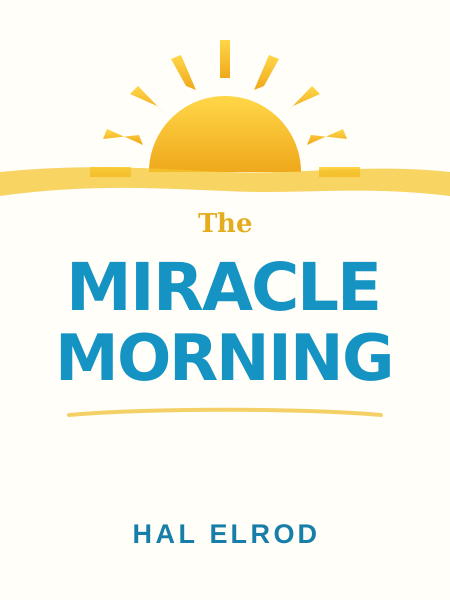

The Miracle Morning
Hal Elrod · 2012
Editorial rating
- Evidence
- 4/10
- Actionability
- 9/10
- Originality
- 4/10
The thesis
How you start your morning determines the trajectory of your entire day and, ultimately, your life. By waking up earlier and dedicating that time to six personal development practices (SAVERS), you become the person capable of creating the life you want - before the world starts demanding your attention.
Who this is for
People who feel reactive rather than proactive about their days, those who "don't have time" for personal development, and anyone who's tried meditation or exercise sporadically but can't build consistency.
My favorite quote
Your level of success will rarely exceed your level of personal development, because success is something you attract by the person you become.
Why it matters
This reframes success from external achievement to internal transformation. You don't chase success - you become someone who attracts it.
Do this
Tomorrow, wake up 30 minutes earlier than usual and spend that time on one activity that develops you (reading, exercise, journaling) - before checking your phone.
Start here
Use the SAVERS routine each morning: Silence (meditation/prayer), Affirmations, Visualization, Exercise, Reading, Scribing (journaling). Even 6 minutes works (1 minute each). The magic isn't in any single practice - it's in stacking them together, every morning, before your day gets hijacked.
Critical summary
Hal Elrod's book is a simple premise executed simply: wake up earlier, do six proven personal development practices, transform your life. The SAVERS framework bundles meditation, affirmations, visualization, exercise, reading, and journaling into a morning routine that's easy to remember and start.
The book's strength is radical actionability. Unlike books that explain why something works, Elrod tells you exactly what to do, when to do it, and how to start tomorrow. The 6-minute version makes it accessible to anyone.
What it gets right
- Each SAVER has independent research support (meditation, exercise, journaling all have evidence)
- Extreme clarity: you know exactly what to do when you finish reading
- Addresses the "not a morning person" objection head-on
- Flexible - can be 6 minutes or 60 minutes
What it gets wrong or overstates
- Zero original research. Elrod bundles existing practices and adds motivational autobiography
- Relies entirely on testimonials, not studies showing this specific combination works better than alternatives
- The book is half motivational sales pitch (mediocrity, testimonials, Elrod's inspirational story) before getting to the actual content
- "Miracle" and "guaranteed" language is classic self-help hyperbole
- Waking earlier doesn't help if you're sleep-deprived - trading sleep for morning routines can backfire
- Affirmations as Elrod presents them lack nuance; poorly constructed affirmations ("I am wealthy") can create cognitive dissonance
- One-size-fits-all approach ignores that night owls exist and chronotype is partially genetic
The SAVERS framework is genuinely useful, but you're paying for packaging, not novel insight.
Key concepts
SAVERS
The six morning practices: Silence, Affirmations, Visualization, Exercise, Reading, Scribing. Do all six, even if briefly.
Life S.A.V.E.R.S.
Elrod's name for the framework, emphasizing these practices "saved" his life.
Silence
Meditation, prayer, or quiet reflection. Start with 5 minutes of focused breathing.
Affirmations
Written statements of who you're committed to being. Include the why and the action, not just "I am successful."
Visualization
Mental rehearsal of your ideal day or goals. See it in detail.
The Snooze Button
Elrod argues the snooze button trains your brain to resist waking. Use the "5-Second Rule" instead.
The 6-Minute Miracle Morning
Proof that "no time" is excuse - you can do SAVERS in 6 minutes (1 minute each).
Core insights
-
Your first thought of the day sets the tone
If you wake up dreading the day, you've already lost. Intentional morning practices create intentional days.
-
Personal development is the precursor to success
You don't get what you want; you get what you become. Invest in yourself first.
-
The snooze button is a symptom
Hitting snooze means you're going to bed without something to wake up for. Design a morning worth waking up to.
-
Consistency trumps intensity
10 minutes every day beats 2 hours once a week. Show up daily, even briefly.
-
"Not a morning person" is a story
You've programmed yourself to believe this. You can reprogram.
Implementation steps
Today
- Set your alarm 30 minutes earlier than usual
- Place phone/alarm across the room so you have to get up
- Prepare: set out workout clothes, journal, book
This week
- Do the 6-minute SAVERS: 1 minute each of silence, affirmation, visualization, exercise, reading, journaling
- Track completion on paper - check off each day
This month
- Expand to 30-60 minute routine as habit solidifies
- Write proper affirmations (commitment + why + action, not just "I am...")
Ongoing
- Protect morning routine as non-negotiable (even when traveling)
- Adjust duration based on season of life, but never skip entirely
Suggested 30-day practice plan
An editorial application plan created by Monolithic Vault - an interpretation of the book's ideas, not part of the original book.
- Day 1
Wake 30 minutes early; do 6-minute SAVERS (1 minute each)
- Day 2
Repeat. Place alarm across room if you snoozed yesterday
- Day 3
Write out custom affirmations (3-5 statements with commitment + why + action)
- Day 7
Expand to 10 minutes per practice you enjoy most (likely exercise or reading)
- Day 14
Evaluate: which SAVERS feel valuable? Adjust time allocation
- Day 21
You've hit habit formation territory - expect some automatic momentum
- Day 30
Review: What's different about your days since Day 1? Journal your observations
Free PDF summary
Take this analysis with you: a designed two-page field-notes sheet with the thesis, my favorite quote, the key concepts and core insights, and the full 30-day checklist. Print it or keep it - free, no signup.
Go deeper
If this analysis earned your attention, the full book goes further than any summary can. The original is always the primary source.