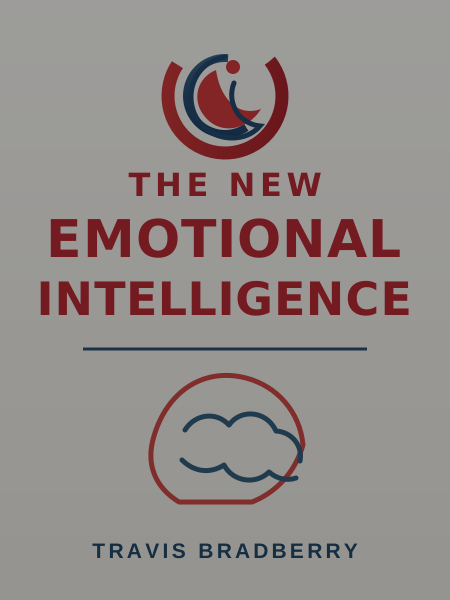
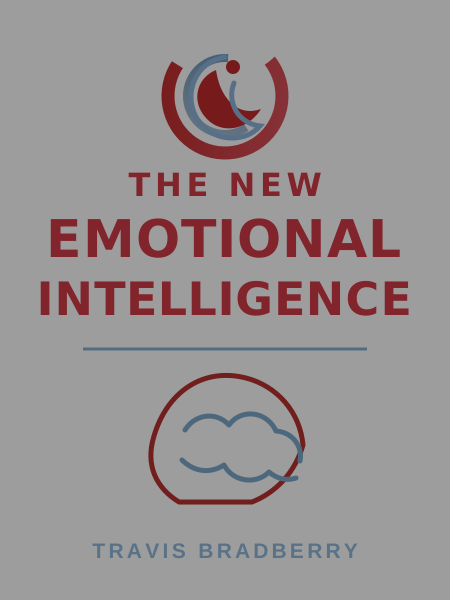
The New Emotional Intelligence
Travis Bradberry · 2024
Editorial rating
- Evidence
- 6/10
- Actionability
- 8/10
- Originality
- 5/10
The thesis
Emotional intelligence has evolved beyond the traditional four-skill model into a dynamic capability integrating AI-age challenges, remote work dynamics, and modern neuroscience. EQ is now the primary differentiator between average and exceptional performance - trainable and measurable, unlike IQ.
Who this is for
Mid-to-senior managers navigating hybrid teams, individual contributors accelerating career progression, and HR professionals updating talent development frameworks. Particularly valuable for anyone managing emotional dynamics across screens and asynchronous communication.
My favorite quote
Your emotional wake is what people feel long after you've left the room - or the Zoom call. In the age of async work, that wake lasts longer and spreads wider than ever before.
Why it matters
Digital communication strips away 93% of cues (tone, body language) - recipients fill gaps with their own biases, usually negative.
Do this
Before hitting send on your next email, ask: "What will the recipient feel reading this 6 hours from now without my tone of voice?"
Start here
Use the Six-Second Pause: When triggered by an email, Slack message, or meeting comment, count to six before responding. This allows your prefrontal cortex to re-engage over your amygdala's fight-or-flight response. This simple delay prevents 80% of regrettable workplace communications and is the highest-ROI EQ technique available.
Critical summary
Bradberry updates his classic EQ model with "The Six Pillars of Modern EQ": Self-Awareness 2.0, Self-Management, Social Awareness, Relationship Management, Adaptive Intelligence, and Digital Empathy. The book incorporates research on Zoom fatigue, neuroscience of digital communication, and how AI tools are reshaping workplace dynamics.
The genuine contribution lies in applying EQ principles to post-2020 work realities. The "Digital Empathy" pillar addresses a real gap in traditional EQ literature - maintaining emotional connection through screens and asynchronous text.
What it gets right
- EQ is trainable and measurable (unlike IQ, which is relatively fixed)
- The "micro-moment" approach: small, frequent interventions beat occasional workshops
- Recognition that digital communication strips away 93% of communication cues
- The framework is genuinely practical for managers
What it misses
- About 60% feels like "Emotional Intelligence 2.0" with new examples - significant overlap with Goleman and Susan David
- Heavy reliance on TalentSmart's proprietary data creates potential bias
- Overstates EQ's predictive power for job performance (meta-analyses show more modest effects)
- Limited discussion of cultural variations in emotional expression
- Missing: power dynamics (easier to be "emotionally intelligent" when you have organizational power)
Evidence base includes 2+ million EQ assessments and post-pandemic workplace studies, but cherry-picks success stories without adequate discussion of failure cases.
Key concepts
Emotional Granularity
Precisely identifying specific emotions rather than "good" or "bad." Saying "frustrated about the deadline" literally calms the amygdala more than "stressed."
Amygdala Hijack
When your emotional center overrides rational thinking. Recognize physical symptoms (racing heart, shallow breathing) as early warning signs.
Digital Empathy
Maintaining emotional connection in text-based communication. Add context cues: "I'm asking because I'm curious, not critical."
Emotional Wake
The lasting impact you leave on others, amplified in async environments. Lasts longer and spreads wider than in-person interactions.
The Two-Minute Rule
Wait two minutes before responding to any emotionally triggering message. Use email drafts or Slack's schedule-send feature.
EQ Debt
Accumulated cost of avoided emotional conversations. Schedule quarterly "relationship audits" with key stakeholders.
Core insights
-
The naming paradox
Specific emotional labels reduce emotional intensity. "I'm experiencing frustration about the deadline, not anger at my colleague" is a trainable skill that literally calms the amygdala.
-
Digital communication requires 3x more intentional EQ effort
Without tone and body language, recipients fill gaps with their own biases - usually negative. Over-communicate context and intent.
-
Empathy without boundaries leads to burnout
Compassionate empathy (understand + help solve) is sustainable. Emotional empathy (feel their pain intensely) depletes resources. Know the difference.
-
Your emotional state is contagious 2-3 levels deep
Leaders' stress cascades to their reports' reports. Conversely, leader optimism follows the same pattern.
-
"Fake it till you make it" works short-term only
Strategic emotional displays deplete willpower. Long-term performance requires actual skill development, not just performance.
Implementation steps
Today
- Complete Bradberry's EQ-i 2.0 self-assessment (free version at talentsmarteq.com) to identify your top 2 strengths and bottom 2 development areas
- Install the Two-Minute Rule: Before responding to any triggering message, save as draft and set a 2-minute timer
This week
- Create an "Emotion Vocabulary List": Identify 5 specific emotions beyond "good/bad/stressed/fine" each day - build emotional granularity
- Book a 30-minute coffee chat with one colleague: "I want feedback on my emotional impact in meetings - what's one thing I do well and one area for improvement?"
This month
- For your next 10 video meetings, implement the 25-minute rule: End 5 minutes early to create recovery buffer between calls
- Track your emotional triggers for 2 weeks: Note the situation, physical sensation, and outcome to identify patterns
Ongoing
- Schedule quarterly "relationship audits" with key stakeholders to address small issues before they compound into EQ debt
- Daily micro-check-ins: "What am I feeling right now?" and "What emotional need does my team have today?"
Suggested 30-day practice plan
An editorial application plan created by Monolithic Vault - an interpretation of the book's ideas, not part of the original book.
- Day 1
Complete EQ self-assessment; identify top 2 development areas
- Day 2
Install Two-Minute Rule; track every instance you use it
- Day 3
Start Emotion Vocabulary List; identify 5 specific emotions today
- Day 7
Review trigger patterns from week 1; identify your top 3 emotional triggers
- Day 14
Complete feedback coffee chat; document actionable insights
- Day 21
Implement 25-minute meeting rule; track cognitive capacity improvement
- Day 30
Compare week 1 triggers to week 4; measure reduction in reactive communication
Free PDF summary
Take this analysis with you: a designed two-page field-notes sheet with the thesis, my favorite quote, the key concepts and core insights, and the full 30-day checklist. Print it or keep it - free, no signup.
Go deeper
If this analysis earned your attention, the full book goes further than any summary can. The original is always the primary source.