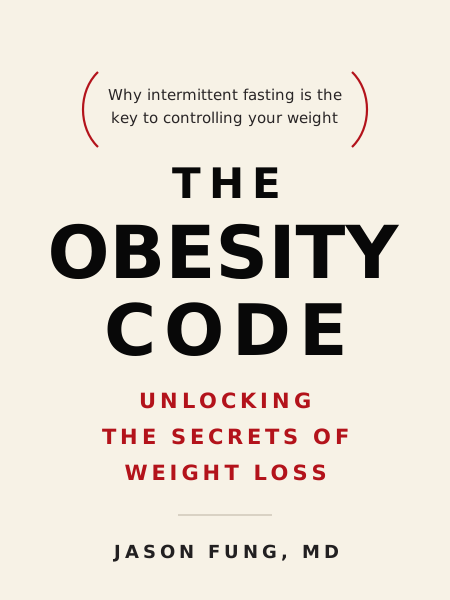
The Obesity Code
Jason Fung · 2016
Editorial rating
- Evidence
- 6/10
- Actionability
- 8/10
- Originality
- 8/10
The thesis
Weight regulation is shaped by hormones, hunger, food quality, and metabolic adaptation, so treating obesity as a simple failure to count calories is both incomplete and cruel. Fung's useful correction becomes less convincing when insulin is promoted from one major factor to the master explanation.
Who this is for
Readers trapped in repeated diet and regain cycles, clinicians seeking a clear account of insulin resistance, and people considering time-restricted eating who want the argument before discussing safety with a qualified professional.
My favorite quote
Diet is Batman and exercise is Robin.
Why it matters
Exercise matters enormously for health, but it is usually a weak tool when expected to cancel an unchanged eating pattern.
Do this
Record yesterday's first and last calorie, meals, drinks, and snacks without changing anything yet.
Start here
Use the book first as an audit of eating frequency, not as permission for extreme fasting. Fung argues that constant grazing and refined carbohydrates keep insulin elevated and leave little time in a lower-insulin state. Track your actual eating window for a week, then discuss any meaningful fasting change with a clinician if you use glucose-lowering medication, are pregnant, or have a history of disordered eating.
Critical summary
Jason Fung, a nephrologist, starts from a real clinical frustration: conventional advice often treats weight gain as poor arithmetic and weight regain as weak character. He proposes a hormonal model centered on insulin. Frequent eating, sugar, and refined carbohydrates raise insulin; chronically elevated insulin promotes storage and insulin resistance; resistance then drives still higher insulin, creating a self-reinforcing cycle around a defended body weight. Calorie restriction alone can trigger hunger and reduced energy expenditure, so Fung prefers reducing refined foods, limiting snacks, and using intermittent fasting to create longer periods with lower insulin. The argument is clear because every chapter pushes toward the same practical conclusion, and it gives readers a biological explanation for why disciplined efforts can still feel brutally difficult.
What it gets right
- Rejects the lazy idea that body weight reflects character and explains why appetite and metabolism adapt during weight loss
- Emphasizes whole foods, fewer refined carbohydrates, and less habitual snacking rather than selling a branded meal replacement
- Presents fasting as one possible eating structure that some people find simpler than continuous calorie tracking
What it overstates or misses
- Treats insulin as the dominant cause of obesity when energy intake, food environment, genetics, sleep, medication, behavior, and other hormones also matter
- Sometimes argues against a cartoon version of energy balance, even though fasting often works partly because people consume less energy overall
- Gives insufficient space to long-term adherence, lean-mass preservation, individual variation, and the medical risks for certain groups
The evidence is uneven. Fung cites physiology, observational research, historical diet trials, and clinical experience effectively, but he often moves from plausible mechanism to confident universal claim. Later randomized evidence generally supports intermittent fasting as a viable weight-loss option, not a uniquely superior one, with outcomes often similar to continuous energy restriction. The book remains valuable because it made insulin resistance, hunger, and metabolic adaptation understandable to a broad audience. The verdict: a strong corrective to calorie moralism, but a weak case for making insulin the sole villain.
Key concepts
Hormonal Obesity Model
Body weight is regulated partly through hormonal signals, especially insulin; use the model to examine food pattern and timing, not to ignore total intake.
Insulin Resistance
Cells respond less effectively to insulin, prompting the body to produce more; improving overall diet, activity, sleep, and weight can support metabolic health.
Body Set Weight
The body adapts appetite and energy expenditure around a defended range; expect maintenance to require systems rather than a short burst of discipline.
Intermittent Fasting
Planned periods without calories that simplify eating for some people; choose a medically appropriate format rather than chasing the longest fast.
Refined Carbohydrates
Highly processed sugars and starches that are easy to overconsume; replace a routine source with a minimally processed alternative.
Core insights
-
Regain Is Biological
Hunger and reduced energy expenditure can intensify after weight loss, so a maintenance plan matters as much as the initial deficit.
-
Eating Frequency Is a Lever
Unplanned snacks and caloric drinks extend the eating window, making them useful places to start before adopting stricter rules.
-
Food Quality Changes Appetite
Protein, fiber, and minimally processed foods tend to support fullness better than rapidly consumed refined products.
-
Fasting Is a Structure, Not Magic
It can reduce decision load and intake, but the window does not cancel poor nutrition or guarantee a hormonal advantage.
-
Context Beats Ideology
The best approach is the one that is safe, nutritionally adequate, sustainable, and compatible with medication and daily life.
Implementation steps
Today
- Write down the first and last time you consumed calories yesterday, including drinks and small snacks.
- Identify one refined snack or sweet drink you can replace with a filling whole-food option.
This week
- Track meals, hunger, energy, and eating times for seven days without judging individual entries.
- Establish a consistent overnight period without calories that remains medically appropriate for you.
This month
- Build three repeatable meals around protein, fiber-rich plants, and minimally processed ingredients.
- Review progress using waist, energy, hunger, strength, and adherence rather than scale weight alone.
Ongoing
- Adjust the eating structure when it harms sleep, training, social life, or nutritional adequacy.
- Seek clinical guidance before fasting if medication, pregnancy, chronic illness, or eating-disorder risk changes the safety profile.
Suggested 30-day practice plan
An editorial application plan created by Monolithic Vault - an interpretation of the book's ideas, not part of the original book.
- Day 1
Record your current eating window, snack pattern, and caloric drinks.
- Day 3
Replace one routine refined food with a protein or fiber-rich alternative.
- Day 7
Review the log and choose one sustainable timing change rather than several extreme restrictions.
- Day 14
Evaluate hunger, energy, sleep, and adherence after one week of the new structure.
- Day 21
Add two resistance-training sessions or another suitable strength practice to support lean mass.
- Day 30
Decide whether the approach is safe and sustainable, then keep, modify, or stop it based on the evidence you collected.
Free PDF summary
Take this analysis with you: a designed two-page field-notes sheet with the thesis, my favorite quote, the key concepts and core insights, and the full 30-day checklist. Print it or keep it - free, no signup.
Go deeper
If this analysis earned your attention, the full book goes further than any summary can. The original is always the primary source.