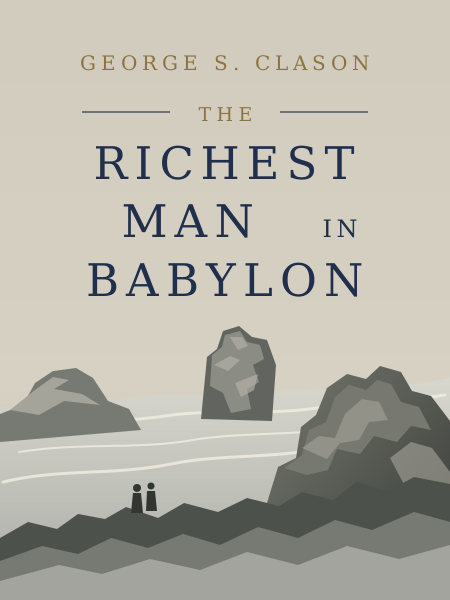

The Richest Man in Babylon
George S. Clason · 1926
Editorial rating
- Evidence
- 6/10
- Actionability
- 9/10
- Originality
- 7/10
The thesis
Wealth-building principles are timeless and simple. Save 10% of income ("pay yourself first"), control spending, invest wisely, avoid get-rich-quick schemes, own your home, ensure future income, and continuously improve earning ability.
Who this is for
People new to personal finance seeking foundational principles, young professionals starting their wealth-building journey, and anyone who learns better through stories and parables than spreadsheets.
My favorite quote
A part of all I earn is mine to keep.
Why it matters
This encapsulates "pay yourself first" - the foundation of all wealth-building. Before paying bills, rent, or anyone else, pay yourself by saving.
Do this
Set up an automatic transfer: 10% of every paycheck to a separate savings account the day it hits.
Start here
The Seven Cures for a Lean Purse: 1. Start thy purse to fattening (Save 10%). 2. Control thy expenditures (Budget). 3. Make thy gold multiply (Invest). 4. Guard thy treasures from loss (Avoid bad investments). 5. Make of thy dwelling a profitable investment (Own your home). 6. Insure a future income (Retirement). 7. Increase thy ability to earn (Continuous learning).
Critical summary
Clason's book is a collection of parables set 4,000 years ago in ancient Babylon. The story format makes these dry financial principles memorable and accessible. While the language is archaic, the logic is as relevant today as it was in 1926.
What it gets right
- The 10% Rule: Provides a clear, non-negotiable floor for savings.
- Risk Mitigation: Emphasizes seeking advice from experts in their specific fields (don't ask a bricklayer for advice on jewels).
- The Power of Intent: Wealth is not an accident; it is the result of a deliberate plan.
What it misses
- Modern Complexity: Does not account for inflation, complex tax laws, or the nuances of modern digital markets.
- Housing as Investment: Some modern economists argue that owning a home is a lifestyle choice rather than a "cure" for a lean purse.
Key concepts
The Five Laws of Gold
A roadmap for how wealth behaves. Gold comes to those who save it, works for those who invest it, but flees those who try to make it do impossible things.
The Goddess of Good Luck
Luck is not a random event; it is the intersection of opportunity and preparation.
The Camel Trader of Babylon
A lesson on the dignity of labor and the importance of repaying debts as a path to self-respect.
Core insights
-
Saving is a habit, not a result
You don't save when you're rich; you become rich because you save.
-
Compound interest is the engine
"Gold multiplies like flocks in the field" when put to work.
-
Protect your principal
It is better to have a modest certain return than a high uncertain one that risks your initial capital.
-
Your most valuable asset is you
Your earning power is tied to your knowledge. "The more of wisdom we know, the more we may earn."
Implementation steps
Today
- The 10% Commitment: Calculate 10% of your take-home pay. This is your "Self-Tax."
- Budget Audit: Identify one recurring expense that represents more than 10% of your "wants" and cut it.
This week
- Investment Research: Find one low-risk, broad-market index fund (the modern version of "loaning gold to the shield-maker") to begin your compounding journey.
- Expert Consult: Identify one financial area you don't understand and reach out to a professional or read a peer-reviewed book on it.
Ongoing
- Maintain your Earning Power: Spend 1 hour a week learning a new skill in your primary field of work.
Suggested 30-day practice plan
An editorial application plan created by Monolithic Vault - an interpretation of the book's ideas, not part of the original book.
- Day 1
Set up the 10% auto-transfer.
- Day 7
Categorize every expense from the last 6 months. Create your "90% Budget."
- Day 20
Pay off your smallest debt in full (The Camel Trader's method).
- Day 30
Evaluate your "purse." Is it fattening?
Free PDF summary
Take this analysis with you: a designed two-page field-notes sheet with the thesis, my favorite quote, the key concepts and core insights, and the full 30-day checklist. Print it or keep it - free, no signup.
Go deeper
If this analysis earned your attention, the full book goes further than any summary can. The original is always the primary source.