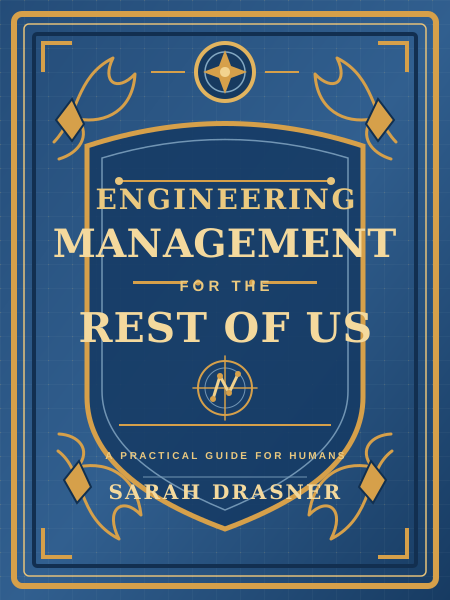
Engineering Management for the Rest of Us
Sarah Drasner · 2022
Editorial rating
- Evidence
- 5/10
- Actionability
- 8/10
- Originality
- 6/10
The thesis
Engineering management isn't about having all the answers or being the best coder. It's about creating an environment where your team can do their best work. This book provides practical, humane guidance for managers who care about people as much as performance.
Who this is for
New engineering managers who feel like imposters, senior ICs considering the management track, and anyone who wants to lead a team without becoming a corporate drone or losing their engineering identity.
My favorite quote
Your job is not to be the best engineer on the team anymore. Your job is to help your team become the best version of themselves.
Why it matters
This is the identity shift that trips up new managers - you measure success differently now.
Do this
This week, help one team member solve a problem they could theoretically solve themselves. Coach, don't fix.
Start here
Start with clarity and safety: Your team needs to know what's expected of them (clarity) and feel safe to take risks, ask questions, and fail (safety). Without clarity, people spin their wheels on the wrong things. Without safety, they hide problems until they're crises. These two foundations enable everything else.
Critical summary
Drasner, VP of Developer Experience at Netlify (previously Microsoft), wrote this as the book she wished she had when she became a manager. It's personal, practical, and refreshingly human. The tone is conversational - more mentor than textbook.
The book covers the basics of engineering management: one-on-ones, feedback, performance reviews, hiring, and career development. What distinguishes it is Drasner's emphasis on empathy and psychological safety alongside traditional management concerns.
What it gets right
- Accessible and practical - no MBA jargon
- Strong emphasis on psychological safety and empathy
- Honest about the emotional labor of management
- Draws from real experience at multiple companies
- Inclusive perspective on diverse teams and different working styles
What it misses
- Relatively thin compared to comprehensive management books
- Less depth on organizational dynamics and politics
- Assumes a relatively healthy organization to start
- Light on the strategic aspects of engineering leadership
- Could use more frameworks and less narrative
- Some advice is common to other management books
A good entry point for new managers, but may feel basic for experienced leaders.
Key concepts
Clarity
Your team needs to know what success looks like. Ambiguity breeds anxiety and wasted effort.
Psychological Safety
The freedom to take risks, ask questions, and fail without fear. Essential for innovation and honesty.
One-on-Ones
Your most important meeting. Use them for listening, coaching, and relationship building - not status updates.
Feedback as Gift
Regular, specific feedback helps people grow. Don't wait for performance reviews.
The IC to Manager Transition
A career change, not a promotion. Your old skills matter less; new skills become essential.
Sponsorship vs. Mentorship
Mentors give advice. Sponsors create opportunities. Your team needs both, and you can provide sponsorship.
Core insights
-
Your success is their success
Stop measuring yourself by your individual contributions. Measure yourself by your team's output and growth.
-
One-on-ones are sacred
Never cancel them. Use them to build relationships and catch problems early. Your calendar will try to swallow them; protect them.
-
Feedback is a skill
Most people are bad at it. Get good by being specific, timely, and focused on behavior, not personality.
-
Safe teams move faster
Psychological safety isn't soft - it's strategic. Teams that can take risks and fail safely out-innovate cautious teams.
-
Career development is your job
Don't outsource it to HR. Know what each person wants and actively help them get there.
Implementation steps
Today
- Schedule 30-minute weekly one-on-ones with every direct report if you don't have them
- Write down one piece of feedback you've been avoiding giving
This week
- Give that feedback - be specific and timely
- Ask each report: "What does career success look like for you?"
This month
- Document your team's expectations: What does good look like? What does great look like?
- Create a development plan for each report based on their career goals
Ongoing
- Never cancel one-on-ones; reschedule if necessary
- Give feedback within 48 hours of the event, not in annual reviews
Suggested 30-day practice plan
An editorial application plan created by Monolithic Vault - an interpretation of the book's ideas, not part of the original book.
- Day 1
Audit your one-on-one schedule - is everyone covered?
- Day 2
Prepare an agenda template: report's topics (70%), your topics (30%)
- Day 3
Give one piece of feedback you've been delaying
- Day 7
Ask each report what they want from their career; document answers
- Day 14
Create individual development plans tied to their goals
- Day 21
Assess psychological safety: Do people bring you problems or hide them?
- Day 30
Review your own management effectiveness; ask for feedback from your team
Free PDF summary
Take this analysis with you: a designed two-page field-notes sheet with the thesis, my favorite quote, the key concepts and core insights, and the full 30-day checklist. Print it or keep it - free, no signup.
Go deeper
If this analysis earned your attention, the full book goes further than any summary can. The original is always the primary source.