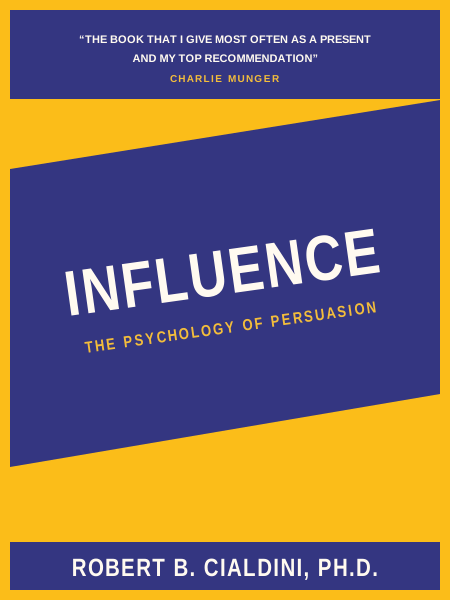
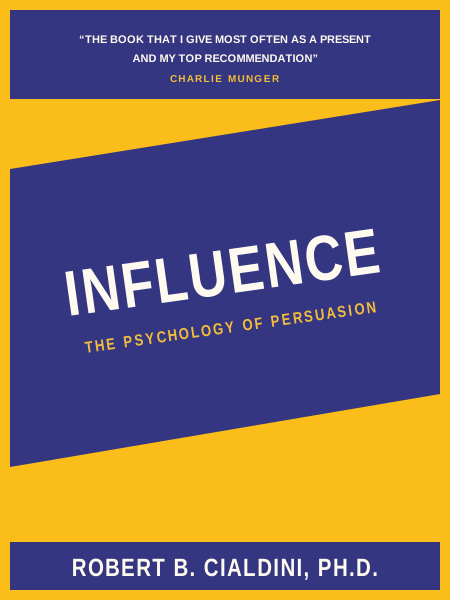
Influence
Robert Cialdini · 1984
Editorial rating
- Evidence
- 9/10
- Actionability
- 9/10
- Originality
- 10/10
The thesis
Human compliance operates through six universal principles - reciprocity, commitment/consistency, social proof, authority, liking, and scarcity. These mental shortcuts usually serve us well, but they can be exploited by "compliance professionals." Understanding these triggers lets you use them ethically and defend against manipulation.
Who this is for
Salespeople who want to understand why techniques work, marketers seeking evidence-based persuasion, negotiators preparing for high-stakes conversations, and anyone who wants to recognize when they're being manipulated.
My favorite quote
A well-known principle of human behavior says that when we ask someone to do us a favor we will be more successful if we provide a reason. People simply like to have reasons for what they do.
Why it matters
Even a meaningless reason ("because I need to") increases compliance. We're wired to respond to the structure of a request, not just its content.
Do this
Next time you ask for something, add "because" and a reason - even an obvious one. Watch compliance increase.
Start here
Reciprocity is the most powerful lever: When someone gives you something - a gift, a favor, a concession - you feel obligated to give back. This is hardwired and nearly impossible to resist consciously. The best defense is recognizing when a "gift" is actually a manipulation tactic. The best offense is giving genuine value first, without expecting immediate return.
Critical summary
Cialdini, a social psychologist, spent three years undercover - working at car dealerships, fundraising organizations, and telemarketing firms - to observe persuasion in the wild. The result is the definitive text on influence, grounded in research but readable as a collection of fascinating stories.
What it gets right
- Six principles are backed by decades of research
- Real-world examples make abstract psychology concrete
- Dual purpose: use ethically AND defend against manipulation
- Updated editions (2006, 2021) add a 7th principle (Unity) and new research
- Has aged remarkably well despite being 40 years old
What it misses
- Some examples feel dated (Hare Krishna tactics, Tupperware parties)
- Less guidance on combining principles for maximum effect
- Can feel like a manipulation manual if read cynically
- Cultural context matters - some principles vary across cultures
- Pre-Suasion (his 2016 book) adds important context about timing
Evidence is exceptional: peer-reviewed research, replicated studies, field observations. This is the gold standard for pop psychology books.
Key concepts
Reciprocity
We repay what we receive. Give first, and people feel obligated to give back.
Commitment & Consistency
Once we commit (especially publicly), we act consistently with that commitment.
Social Proof
When uncertain, we look to what others are doing. "Bestseller" and "most popular" work.
Authority
We defer to experts and symbols of expertise (titles, uniforms, credentials).
Liking
We say yes to people we like. Similarity, compliments, and familiarity build liking.
Scarcity
We want what's rare or disappearing. "Limited time" and "only 3 left" trigger urgency.
Unity
(7th principle, added 2016): We're influenced by those we see as "us" - shared identity.
Core insights
-
Rejection-then-retreat works
Ask for something big (that will be refused), then ask for what you really want. Your "concession" triggers reciprocity.
-
Small commitments lead to big ones
Get a foot in the door. People who display a small sign are more likely to display a large one later.
-
Social proof is strongest in uncertainty
When we don't know what to do, we follow others - especially similar others.
-
Scarcity + loss framing is potent
"What you'll lose" beats "what you'll gain" in motivating action.
-
The reason doesn't have to be good
"Because I need to make copies" works almost as well as a real reason. We're wired for the structure, not content.
-
Liking can be manufactured
Salespeople find common ground, give compliments, and build familiarity deliberately.
Implementation steps
Today
- Identify one situation where you can give first (favor, information, compliment) without expecting return
- Notice when someone uses "limited time" or "only X left" on you. Pause before responding.
This week
- Use social proof in one request: "Many people in your situation have found..."
- Get a small commitment before asking for a larger one
This month
- Audit your own compliance: When did you say yes without thinking? Which principle was at work?
- Practice the rejection-then-retreat technique in a low-stakes negotiation
Ongoing
- Before any persuasion attempt, ask: Which principle applies here?
- When you feel urgency or obligation, pause and ask: Is this genuine or manufactured?
Suggested 30-day practice plan
An editorial application plan created by Monolithic Vault - an interpretation of the book's ideas, not part of the original book.
- Day 1
Read/review the six principles. Identify which you're most susceptible to.
- Day 2
Give something of value to someone without asking for anything back
- Day 3
Notice social proof in advertising and conversation
- Day 7
Use commitment/consistency: Get a small yes before the big ask
- Day 14
Practice the rejection-then-retreat technique
- Day 21
Audit: How many times were you influenced this week? By which principles?
- Day 30
Teach one principle to someone else (teaching = mastery)
Free PDF summary
Take this analysis with you: a designed two-page field-notes sheet with the thesis, my favorite quote, the key concepts and core insights, and the full 30-day checklist. Print it or keep it - free, no signup.
Go deeper
If this analysis earned your attention, the full book goes further than any summary can. The original is always the primary source.